The Tory leadership contest shows the direction of the party
It’s tempting to dismiss the Tory leadership contest as a sideshow. It involves the mere rump of MPs that the parliamentary Tory party was reduced to in the electoral debacle it suffered in July. Who cares that Robert Jenrick won the first round, winning 28 MPs’ votes, beating the favourite, Kemi Badenoch, into second with 22 votes?
But the ascent of the obscure Jenrick is symptomatic of what political scientists call the mainstreaming of the far right. By this is meant less the success of the far right in winning votes and seats, which is certainly happening. It’s more to do with the indirect growth of its influence on the mainstream parties.
Jenrick resigned as a junior minister soon after Rishi Sunak sacked Suella Braverman last November. He may have been motivated by pique that he wasn’t appointed home secretary in her place. Instead James Cleverly, yet another leadership candidate now, got the job.
But Jenrick reacted by seizing on the issue that Braverman had made her own. He campaigned for a much tougher clampdown on migration and resisted any attempt to water down the plan to deport unsuccessful asylum seekers to Rwanda.
Jenrick has been offering a more low-key—and maybe therefore a more palatable—version of the inflammatory rhetoric pumped out by Braverman. In February he said, “We have allowed our streets to be dominated by Islamist extremists.”
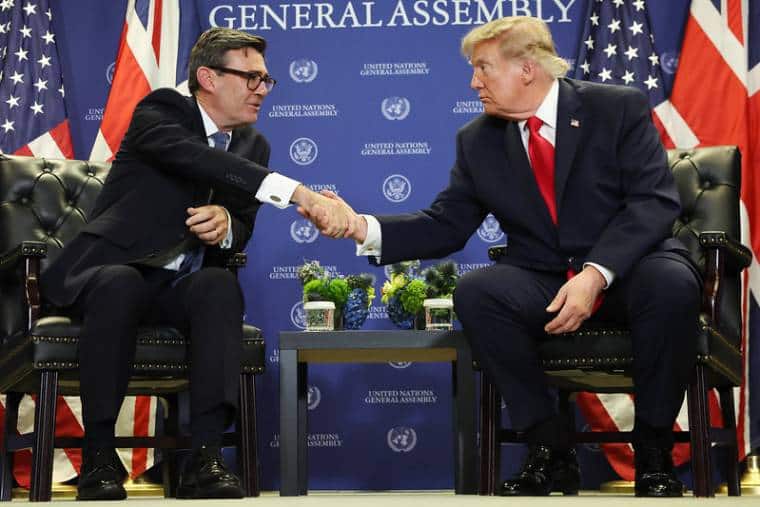
During last month’s riots, Jenrick demanded the arrest of anyone saying Allahu Akbar, which means “God is Great” in Arabic. And in recent days, he has been defending his support for Donald Trump. This comes just as even Dick Cheney, the Republican who was George W Bush’s vice president, said that he will be voting for Kamala Harris.
Steering far rightwards has served Jenrick well. Clearly many Tory MPs think they should respond to the success of Reform UK by embracing Nigel Farage’s politics.
It’s an open question whether or not Jenrick will actually defeat Badenoch. She seems more popular with the Tory membership, who has the final say.
Peter Oborne—one of the few surviving examples of that always rare breed, the liberal Tory—points out she’s almost as bad. He’s rightly warned that Jenrick’s success shows the “Conservative Party is mutating at high speed into a far right movement comparable to the anti-immigrant Alternative fur Deutschland (AfD) party”.
This is indeed something happening on a Europe-wide scale. Germany’s hapless ruling coalition has responded to the AfD’s success by promising tougher immigration policies. One minister has even suggested taking over Sunak and Braverman’s defunct Rwanda scheme.
The mainstreaming of the far right is even clearer in France. Two months ago, in the second round of the legislative elections, president Emmanuel Macron allied with the broad left New Popular Front (NFP) to prevent Marine le Pen’s fascist National Rally (RN) winning a majority. This worked, but last week Macron contemptuously rejected the NFP’s demand that they be allowed to form a government.
He said that, even though they won the most seats, they didn’t have a parliamentary majority. So instead Macron appointed Michel Barnier as prime minister.
He is a member of another rump centre right party, Les Republicains (LR), which came fourth. Because the NFP will vote Barnier down, he can only survive with the votes or abstentions of the fascists.
The Le Monde newspaper ran the headline, “Michel Barnier—a prime minister under the RN’s supervision.” It helps that he’s a reactionary homophobe who ran an
anti-migrant campaign when he stood for president in 2022. Le Pen has said they’ll allow Barnier to govern but they want concessions from him.
Like the successes of the AfD in eastern Germany, Barnier’s appointment marks a dangerous development—the increasing institutionalisation of the fascists within the state itself. This hasn’t happened in Britain yet.
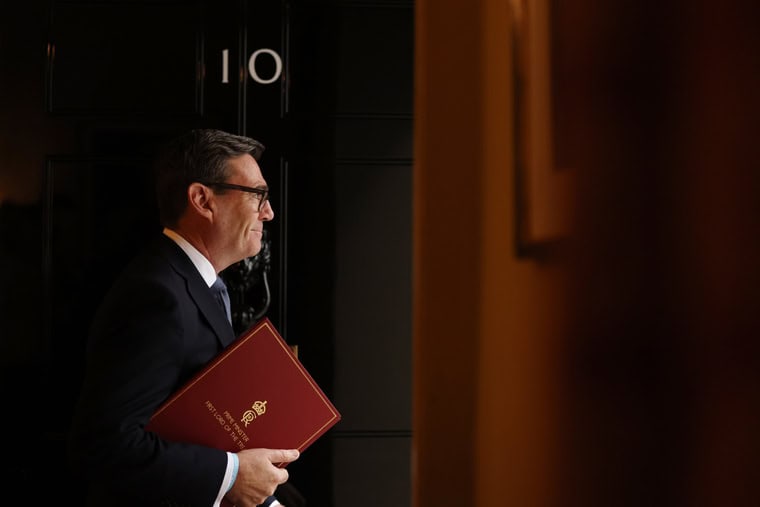
But the volatility of politics could pitch the likes of Jenrick into 10 Downing Street in a few years’ time.


What did Burnham do?
Learn from mistakes of Corbynism
What do we learn from his speech?
US imperialism is struggling to maintain its grip on the Middle East