What lies in Trump’s second term?
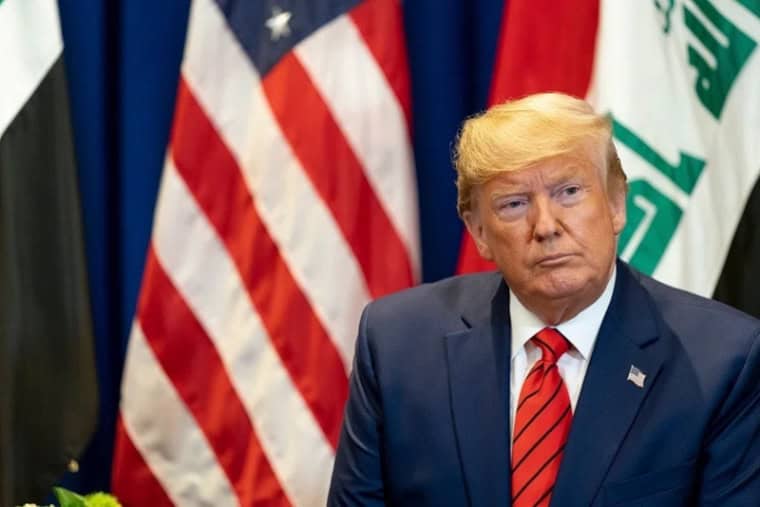
Anyone witnessing United States president Donald Trump’s second inauguration won’t be able to say they haven’t been warned. It is a corporate event, funded by big business to the tune of perhaps £164 million.
According to the Financial Times newspaper, “Big Tech giants Meta, Google, Amazon and Microsoft have donated at least $1 million each over the past few weeks, while Apple’s Tim Cook has donated the same amount—Uber and its chief executive donated $1 million each.
“Century-old American carmakers and banks, the pharmaceutical lobby and the leaders of the nascent AI industry have all rowed in behind the president-elect.” Centre-left think-tanker Lisa Gilbert calls the inauguration “a record-breaking swamp of special interests”.
Though Trump flaunts his largely imaginary wealth, his political success lies in combining this with anti‑establishment agitation. In the words of the radical art historian T J Clark, Trump articulates “the simple bitterness of those who once, so recently, were empire’s low-level beneficiaries. Where did my job go (and with it my health plan)? What are my kids on? What the hell is racial sensitivity training? (Wasn’t whiteness the keystone of the whole deal?)”
So how will this hugely contradictory combination work out in Trump’s second term? One thing’s for sure—it will be very nasty from the start. Asked about rumours of a big anti‑migrant operation in Chicago next week, Trump’s “border czar” Tom Homan replied, “There’s going to be a big raid all across the country. Chicago is just one of many places.”
Trump also wants to wrest advantages from other ruling classes, though it’s unclear how far he wants to go. Acting on his threat to seize the Panama Canal would turn Latin America, increasingly dependent on trade with China, against him.
Canada is unlikely to cave into Trump’s demand to join the United States. But his threats may extract concessions. He may also get somewhere with Greenland, whose natural resources and strategic location at the mouth of the Arctic make it a tempting target. In Greenland there exists a movement for independence from Denmark.
Economists estimate that the new tariffs against Chinese imports will cost China less than one percent of economic output. The Financial Times points out that China’s manufacturing production exceeds that of the next nine producers combined. It leads in 57 of 63 critical technologies. It should be possible to replace lost markets in the US.
The disruptive consequences of Trump’s escalating trade war may be felt most elsewhere, for example in Europe. Rivalries among states will intensify, making global capitalism even harder to manage.
Meanwhile, Trump’s policies will cause domestic conflict. Elon Musk, his noisiest billionaire supporter, has been riding high since the election. But his economic empire is global. Musk’s firm is critically dependent on China, where he has his biggest electric vehicle factory and receives generous subsidies from Beijing. Far right agitator Steve Bannon has denounced the Tesla boss for “techno-feudalism” because Musk said he’ll “go to war’ to defend the H-1B visa that allows US corporations to recruit skilled foreign workers.
Moreover, investors have been selling US Treasury bonds, which the government uses to borrow money. The effect has been to increase the interest the US has to pay on this borrowing. This has ricocheted through the British and other European bond markets. This development reflects the fear in financial markets that Trump’s tariffs will push up inflation.
One legacy of neoliberalism is that the management of the economy is in the hands of notionally independent central banks. They reacted to the 2021-22 inflationary surge by pushing up interest rates and slowing growth.
The Republicans now dominate all three branches of the US government—the White House, Congress and the Supreme Court. But they don’t control the very powerful central bank, the Federal Reserve Board. If inflation goes up again and the Fed increases interest rates, hitting growth, Trump will go on the offensive. He might try to remove the Fed chair Jerome Powell.
Trump should enjoy his triumph while he can. He faces plenty of pitfalls that could destroy his administration as brutally as Gaza destroyed Joe Biden’s.


Learn from mistakes of Corbynism
What do we learn from his speech?
US imperialism is struggling to maintain its grip on the Middle East
Conquest, war, famine and death