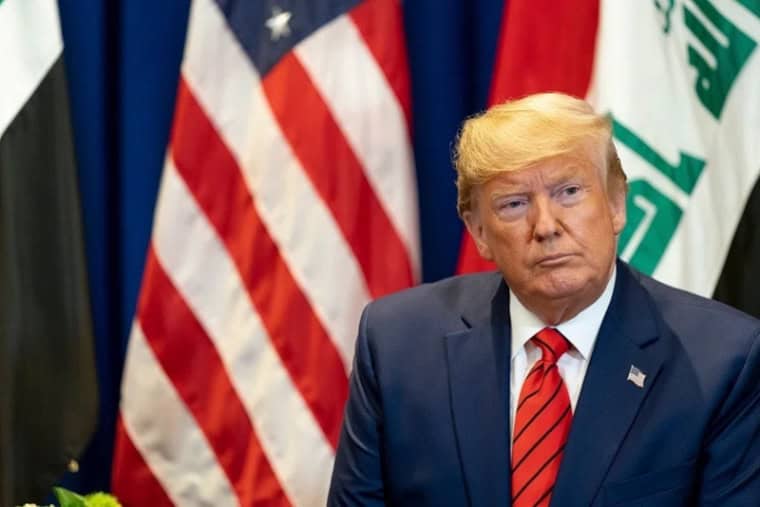
Elon Musk has been a large funder of Trump’s campaign (Photo: flickr/Trump White House Archived)
Now the immediate shock of Donald Trump’s victory has worn off, there’s much anxious speculation about what he will actually do. A lot of attention has naturally focused on the appointments he’s announcing.
In his first administration Trump sought to reassure the core ruling class—the big transnational corporations and banks and the national security apparatus that keeps the world safe for them. He filled his cabinet largely from their ranks. This time no more Rinos—“Republicans in Name Only”. Trump is determined to appoint only those who are personally and politically loyal to him. Hence the parade of anti-vaxxers, dodgy Congresspeople, ultra-Zionists and frackers. Their records and views are pretty scary.
But the situation is more complex and contradictory than it seems. Last time, Trump had to reassure the core ruling class because his social base lay elsewhere. It consisted of capitalists who had got rich tapping the domestic market and often the US state—for example by running care homes.
This time, however, the core ruling class was split. Tesla boss Elon Musk, previously a Democrat, led a big chunk of Silicon Valley money into the Trump camp. Stephen Schwarzman, CEO of the investment company Blackstone, fell out with Trump over the storming of the US Capitol on 6 January 2021. But he endorsed him this time. Meanwhile, Trump has maintained cordial relations with arguably the most powerful capitalist in the world, Larry Fink, boss of the even bigger investment company BlackRock.
Trump is offering these corporate titans more of the red meat he gave them last time—tax cuts and deregulation. But some of his other policies are not so straightforwardly in their interests. Big US capital operates globally, but Trump wants to raise more barriers with the rest of the world.
One of his headline promises is to expel “illegal” migrants. But Goldman Sachs estimates that immigration has boosted the US workforce by more than 4 million since 2023.
This “helped rebalance the labour market with little economic cost”. Investment bank Morgan Stanley warns that “a curtailment of immigration will force slower growth and higher inflation”.
The higher tariffs on imports that Trump is threatening would disrupt the transnational supply networks on which capitalist production depends today. Despite Musk’s embarrassing far right posturing he is the boss of a global electric vehicle company that has factories in China and Germany.
His tweet praising the ultra free market libertarian Argentinian president Javier Milei for cutting tariffs suggests he isn’t entirely comfortable with Trump’s trade policy.
Another complication concerns the workings of US politics. It’s true that the Republicans now control all branches of government—the presidency, both houses of Congress and the supreme court.
But the US state functions to achieve two results. First, to ensure that elected officials of both parties serve big capital and, second, to allow rival corporate interests to lobby and bargain their way to the best outcomes for them. This is why Fink said it “really doesn’t matter” who won the election.
Trump has to operate this system, which often works agonisingly slowly. He knows this, which is why he is looking for ways to bypass Congress. Ash Merton writes on the New Left Review website, “Trump’s second term looks set to replay a familiar pattern.” This is where “his grandest promises come up against the practical difficulties of mediating between rival interest groups and their political representatives, both inside and outside the administration”.
“During his first stint in office, this dynamic forced him into a series of retreats and compromises, which he attributed to ‘deep state’ sabotage, deflecting the blame onto this shadowy enemy. The next four years will be characterised by a similar attempt at displacement.”
Nevertheless, because he’s been through it before, Trump will try to show his base things will be different this time. Most likely, he’ll start with what he calls “the largest deportation operation in American history”. This could unleash untold suffering. The left in the US and the rest of the world need to prepare to resist.


Learn from mistakes of Corbynism
What do we learn from his speech?
US imperialism is struggling to maintain its grip on the Middle East
Conquest, war, famine and death