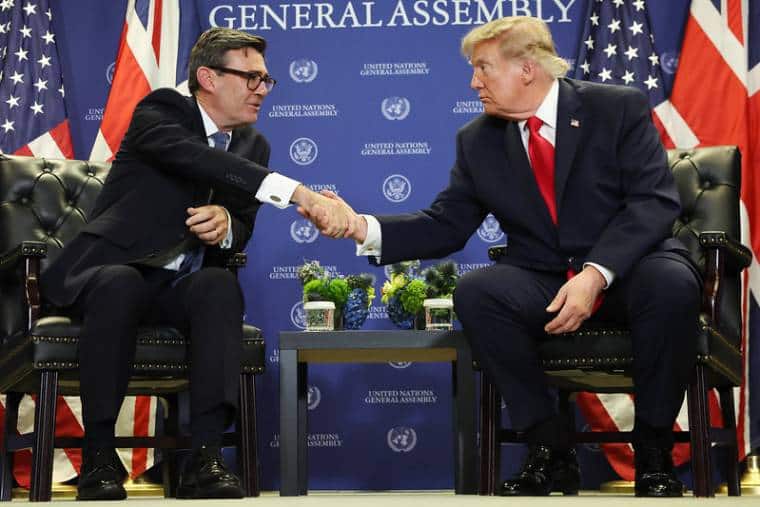
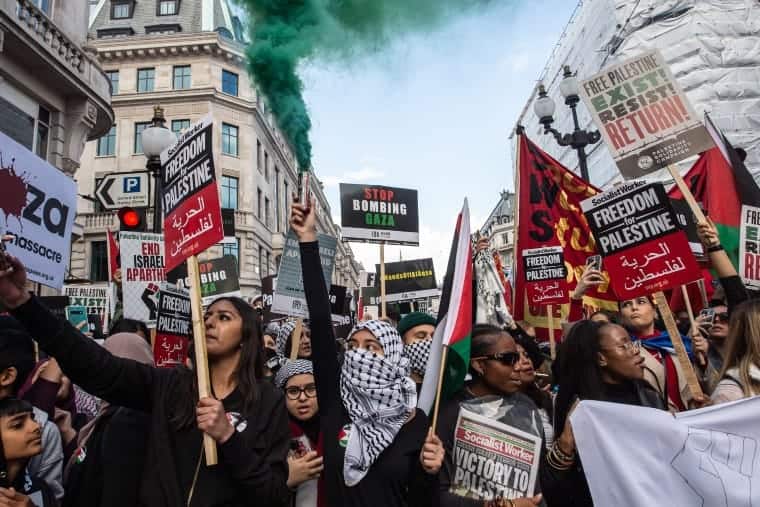
The bosses will feel empowered to undermine strikes and unions with new laws (Picture: Guy Smallman)
Bosses are beginning to use the new Tory laws that let them use agency workers to undermine strikes. This is how laws used against the working class are normalised. They are often used first in low-profile cases. Then, if they are not challenged effectively, more firms feel confident to use them in bigger battles.
Royal Mail bosses will be tempted to mobilise them in large numbers over Christmas—and beyond. And at the moment trade union leaders are letting them get away with it. One of Boris Johnson’s last moves as prime minister was to rush an amendment through parliament that lifted the ban on using agency workers without any limits during strikes.
His government boasted, “With industrial action across a range of sectors threatening to disrupt crucial public services, the government has worked at speed to repeal trade union laws that restrict employment businesses from providing temporary agency workers to fill vacant positions caused by staff striking.”
Grant Shapps, then the transport secretary, said, “For too long unions have been able to hold the country to ransom with the threat of industrial action but this vital reform means any future strikes will cause less disruption.” Bosses had already happily exploited loopholes to hire agency staff beforehand, such as when Coventry’s Labour-led council paid agency workers to scab on the HGV strikers.
In 2015 the Tories consulted on revoking Regulation 7 which was supposed to prevent agency workers from covering strikers’ work. The consultation was deemed “not fit for purpose” and no formal response was published. Yet during the rail strikes in July this year an amendment to overturn Regulation 7 was pushed through parliament based on the 2015 consultation.

Apart from a few press releases, unions sat back and watched. In October at Drapers’ Prygo Priory School in Harold Hill, Essex, teachers and support staff struck over restructuring that would cut hours and change pay grades.
But management brought in agency workers in an effort to undermine the strike. Stagecoach bosses in Hull promised last month to keep buses running by using “third-party contractors” when drivers struck. UCL university in London is using agency workers too.
Outsourced security guards in the IWGB union are fighting to be paid at the same rate as UCL’s in-house staff at £15 an hour. But bosses brought in subcontracted workers “as a short-term measure to ensure continuity of operations and safety on campus during the period of industrial action” by the striking guards.
UCU union’s response was to write a strongly worded letter to UCL president Dr Michael Spence. Unite union officials used the threat of agency workers to warn against escalating action during the recent Liverpool dockers’ strike. Activists told Socialist Worker that they were advised that if they walked out on indefinite strike then bosses would bring in agency workers.
That didn’t stop extended strikes, and ultimately a victory. But it shows how even the threat of the law has an effect. Bosses of rail companies have also used a sprinkling of agency workers to test out their wider use during strikes. Unions are so far relying on the courts rather than hard-hitting action to mobilise against the law.
The TUC union federation—along with 11 individual unions—has launched a judicial review. This is on the grounds that the government failed to consult the unions and the law breaches human rights. The TUC criticised the “reckless” decision that posed “a threat to public safety”.
Relying on ministers to act and hoping for positive results from lengthy court cases isn’t the way to beat back the Tories’ laws being used now. The only solution to more attacks from the Tories is workers fighting back.


Why is the British government worried about this activist?
What did Burnham do?
Learn from mistakes of Corbynism
Build for the Palestine national demonstration on 10 October