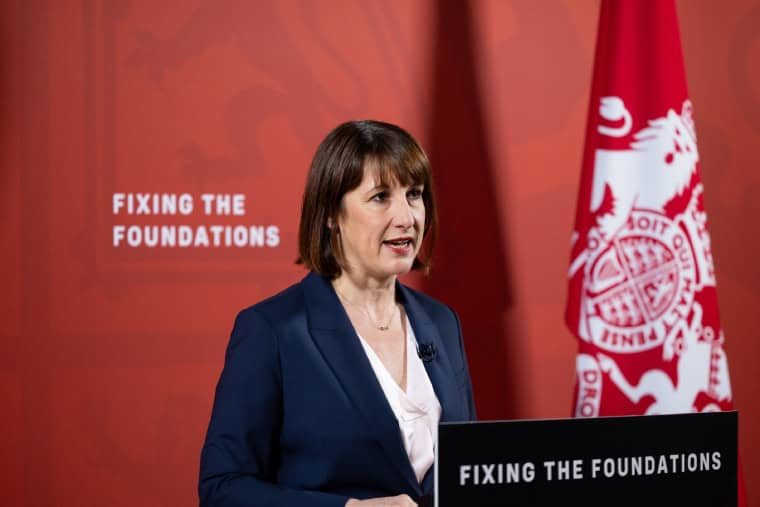
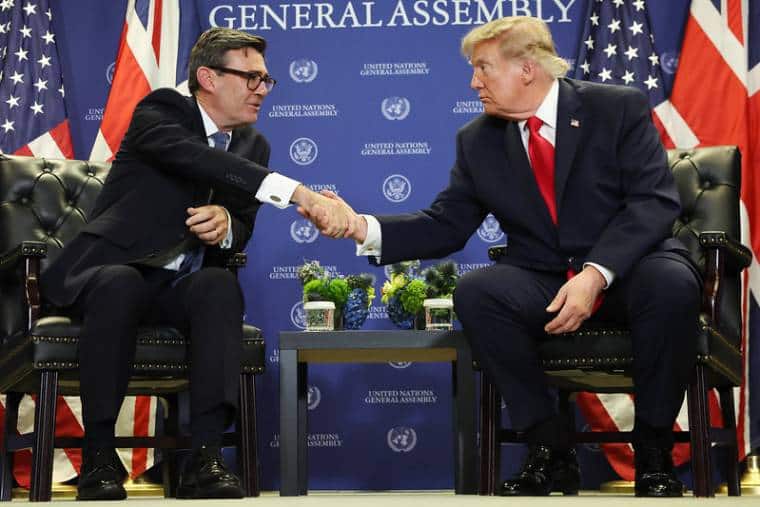
Portions of the capitalist class have little faith in Starmer and Reeves (Photo: flickr/ Keir Starmer)
Keir Starmer and Rachel Reeves are in big economic trouble. They’ve raised taxes and cut spending to reassure rich investors the budget deficit is under control.
But the money men—and a few women—who move vast sums across the foreign exchanges every day in pursuit of quick profits don’t believe Labour will meet its debt targets. They just don’t believe there will be the economic growth Starmer and Reeves have promised.
Interest rates are now being forced higher. This will further cut growth, which may force Reeves to raise taxes and cut spending even more. But the economic problems go far wider than Britain.
Debt makes the capitalist world go round. Few houses would ever be sold if people didn’t take out massive mortgages and few cars are bought without loans. Many companies couldn’t invest to expand or improve productivity, and governments couldn’t sustain their spending without borrowing money.
If lending were to seize up, economies would collapse. Debt is effectively a promise by the debtor to pay the debt back later, paying interest on that debt in the meantime. You end up paying much more than the initial price of whatever the debt was being spent on. But that credit enables you to buy now rather than wait until you’ve saved up.
The stability of this structure of debt all depends on things in the future turning out as predicted when the loans were granted. The major problem today is that debt across the world has grown very significantly relative to the value of goods and services being produced. And interest rates are generally rising.
World debt now stands at over £243 trillion—almost three times the total value of annual global production of goods and services. But it’s predicted to climb even further.
Already, a number of less-developed and developing countries are in severe debt distress, which dramatically impacts their meagre spending on health and education. The big problem is low, or no, economic growth. The profitability of companies has been insufficient to encourage productive investment.
But central bank interest rates have been raised to combat inflation. Further, interest rates in the private market are even higher because investors are seeing lending as riskier. This makes it much more difficult to pay interest on debt.
Government debt in particular has grown massively in a number of richer economies, and is now squeezing government spending. In France, government debt stands at over 110 percent of annual production. It’s over 100 percent in Britain. This far exceeds the 60 percent benchmark enshrined in the European Union stability and growth pact.
On top of this, the little-regulated shadow banking sector, dominated by private equity companies, is making ever‑riskier investments in companies they are loading with debt to make quick profits. As John Plender put it in a recent Financial Times newspaper article, there are “no prizes for guessing where the next financial crisis will emerge from”.
Governments and central banks can intervene to arrest the development of crises as debts are called in and companies and banks face bankruptcy. That is what happened in the Great Financial Crisis of 2008.
But governments with a large burden of debt lack the ability to stimulate their economies. Japan, once the powerhouse economy of the world, has been stuck with very low growth for over 30 years. The Japanese government’s debt now stands at a staggering 263 percent of annual production. Some economists claim China may be heading for similar problems.
As major European economies stagnate, it seems unlikely that China will come to the rescue. The United States economy is currently growing more strongly than most. But projections for the growth of US federal debt, currently at over $36 trillion—120 percent of US annual production—are eye-watering and unsustainable.
Trump’s policy of imposing a broad range of tariffs to protect and stimulate US-based industry is likely to make a bad situation for the world economy worse. The economic outlook is gloomy and could quickly become catastrophic.


Why is the British government worried about this activist?
What did Burnham do?
Learn from mistakes of Corbynism