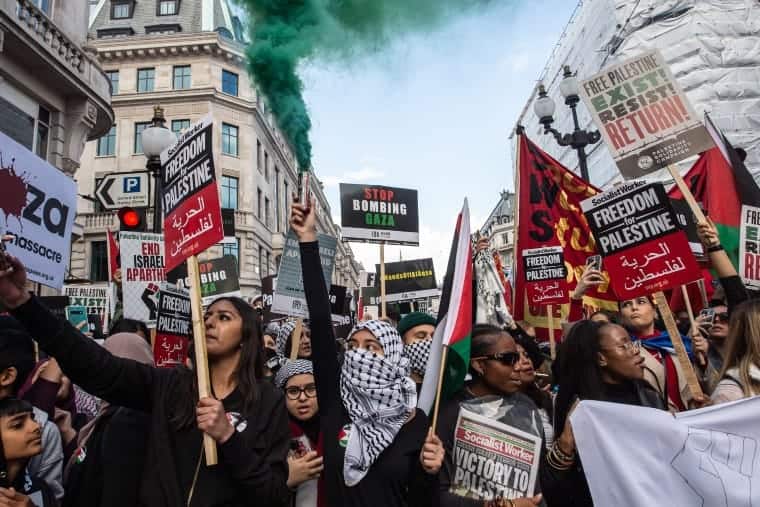
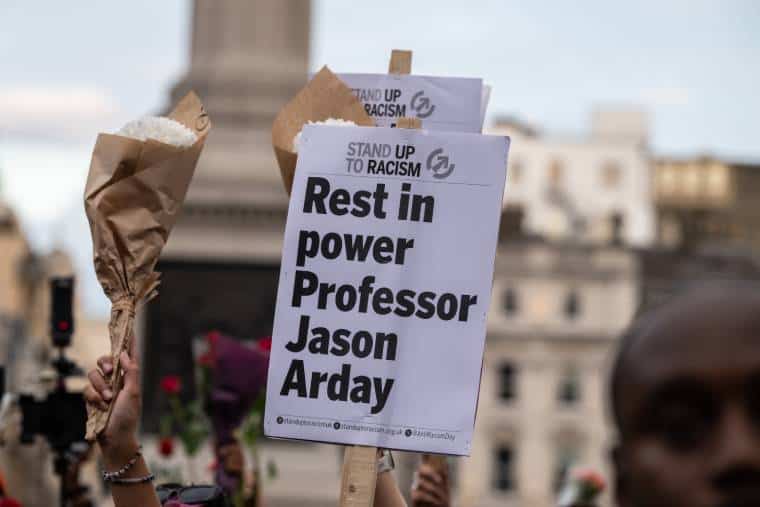
David Denny (centre), a reparations campaigner from Barbados, joined a march organised by Stand Up To Racism in London last weekend
How can up to 20 million stolen people, 410 billion hours of unpaid labour, brutal enslavement and over 400 years of institutional racism be compensated? That’s a question asked for decades by those who suffered from the transatlantic slave trade.
The legacy of slavery—racism, debt and deprivation—remains today. As do the states, families and institutions that became the pillars of this bloody trade. Some that benefited from slavery say they’ve made reparations via apologies. Others have promised financial compensation or development of infrastructure in west Africa and the Caribbean.
Britain was the architect of the slave trade yet dismisses the call for compensation. After slavery was abolished across the British Empire in 1833, £300 billion in today’s money was paid in compensation to 3,000 slave-owning families. The interest for this was finally paid off in 2015.
Meanwhile Haiti has paid its coloniser France £24 billion over 122 years for its independence. Not only is this abhorrent, but the financial pressures of the debt have crushed Haiti. Its poverty rate is 59 percent, with the median annual income at £366, compared to France at £25,300.
Jamaica is looking for some £7.5 trillion in compensation. It has been ravaged by IMF and World Bank debt, devaluing its currency and implementing austerity as a result.
Jamaica gained independence from Britain in 1962, but relied on loans to fund development projects. By 2019 Jamaica had suffered 32 of its 57 years of sovereignty tied to an IMF structural adjustment programme. In 2013 its debt was 147 percent of its gross domestic product.
Apologies aren’t enough, especially when Britain has happily written out of history its role in the slave trade and the legacy of slavery is crushing the countries that suffered from it.
But a recent argument in the Guardian newspaper’s letters page asked whether “everyone in Britain” has benefited from the slave trade and its products and should therefore pay up.

Would that mean everyone who has walked through Liverpool, Britain’s once slave-trading capital that was rebuilt on slave money, should pay reparations? Or were those who had sugar in their coffee responsible for the horrors inflicted on slaves?
The slave trade was institutional, built into the fabric of the newly emerging capitalist system that it financed. Most workers in Britain, Europe and the US didn’t benefit from slavery. They too became the exploited victims of a cruel system that worked them to death for profit.
It’s true that slave money financed cotton mills, but life for workers was brutal. In industrial cities such as Manchester, Liverpool and Glasgow life expectancy dropped to as low as 25 years during the 19th century. Slaves in Barbados’s sugar fields died in their teens and early twenties.
Companies such as Lloyds of London, the Royal Bank of Scotland, and Greene King, made their bosses filthy rich on the backs of a new class system reliant on slavery and exploitation.
The land-owning Trevelyans had 1,000 slaves in Grenada and were given £3 million in today’s money in compensation. Yet handing over money—£100,000 in the Trevelyans’ case—doesn’t undo the horrors caused by the slave trade. And there’s the question, even after that money is paid, of where and who it goes to.
Abolishing the debts of countries ravaged by slavery and bridging the wealth gaps that have been caused by racism is an important starting point. But reparations won’t do away with the racism ingrained in a class system or the system itself. True justice for the horrors of slavery and its consequences means ripping apart the system that created them.
It means creating a new society that isn’t built on exploitation. And it means seizing blood-soaked profits, land and power from those at the top.


Build for the Palestine national demonstration on 10 October
Racism first developed as a justification for enslavement