A photo of the My Lai massacre (Picture: Ronald Haeberle)
The recently confirmed death of mass murderer William Calley shone the light again on one of imperialism’s foulest crimes during the United States war in Vietnam. On 16 March 1968, Calley led a US Army platoon that carried out the mass murder of over 500 civilians.
Helicopters took Calley’s unit to a village in Son My—known to US soldiers at the time as My Lai 4. The mission, they were told, was to search and kill Vietnamese resistance members and sympathisers.
When they arrived, the troops met no resistance from the residents of the village, who were found cooking breakfast over outdoor fires. Calley and his unit then killed the civilians during a massacre that took several hours.
They rounded people up, shot them and burnt the village down. Others they pushed into a drainage ditch and killed with automatic fire and grenades. They raped women and girls before murdering them.
Varnado Simpson, one of the soldiers involved, said, “I cut their throats, cut off their hands, cut out their tongue, their hair, scalped them. I did it. A lot of people were doing it, and I just followed. I lost all sense of direction.” He later killed himself.
Ronald Haeberle, the US Army photographer during the massacre who later helped to expose it, described the killing and the racist background. “There was a small child that came walking toward me.
“He was wounded in the leg, he was by himself. I just wanted to take a photograph of this child, and all of a sudden the GI just shot him. He put three slugs into him. First shot him in the stomach, second shot lifted him up, third shot put him down on the ground and all the body fluid just came out.”
The soldier, said Haeberle, “just looked him in the face, and he had the coldest, hardest look. And just walked away. “We were told, ‘Life is meaningless to these people, the enemy is not like us. They’re not quite human’.”
Soldiers testified that their orders were to kill all “suspects” as well as animals. When Calley’s troops went to a briefing the night before the massacre, they asked their commanding officer Captain Ernest Medina, “Are we supposed to kill women and children?”
Medina’s replied, “Kill everything that moves.” How can such murderous cruelty be explained? My Lai came just weeks after the Tet Offensive when the Vietnamese resistance shattered the US claim that it was headed for success in the war.
The area around My Lai saw some of the fiercest fighting after Tet. As always imperialism reacted to humiliation with ferocious retribution. And it is the same process that underpins the genocide by Israel after 7 October.
The US military and top politicians tried desperately to cover-up what had happened. And for a time they succeeded. But then some of those involved began to tell the truth and journalist Seymour Hersh worked relentlessly to expose it.
The army had to order an investigation, which saw charges withdrawn against nearly everyone except Calley and Medina. A military court acquitted everyone except Calley. The jury—made up of six army officers—found him guilty of premeditated murder of 22 civilians.
The generals allowed him to take the blame. If he had been allowed to use the excuse he was “obeying orders” then the question of where they had come from would have been devastating for the high command. Calley was sentenced to life in prison.
But he served only three days behind bars until then-president Richard Nixon ordered his release under house arrest at his army base. He was fully released three years later.
The history of imperialism is soaked with many massacres such as My Lai, and many criminals such as Calley who ordered the horrors. But even this scale of killing did not save the US in Vietnam.


Learn from mistakes of Corbynism
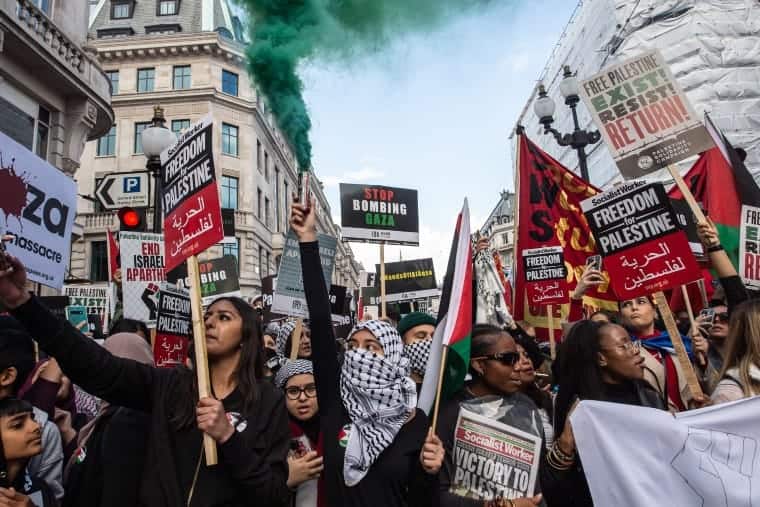
Build for the Palestine national demonstration on 10 October