Young rebellions sweeping the globe have rekindled their hopes of change (Photo: Guy Smallman)
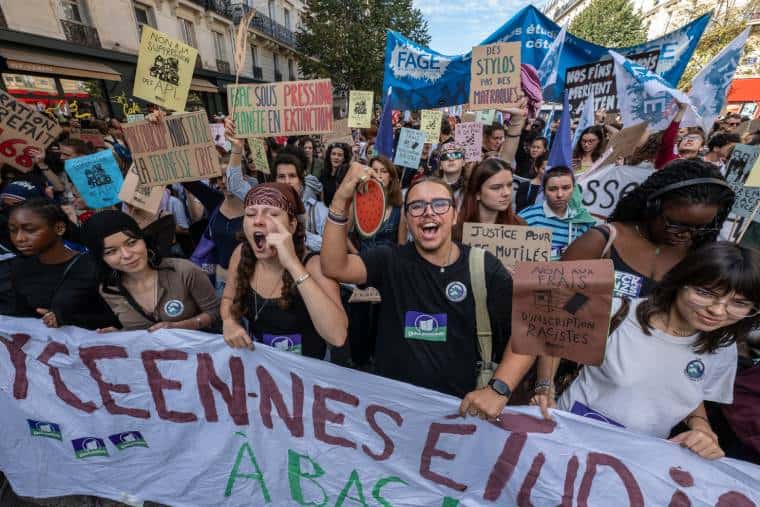
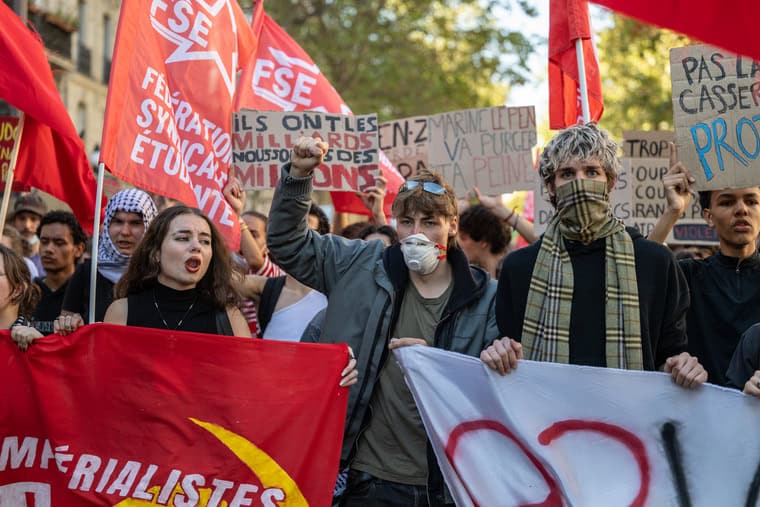
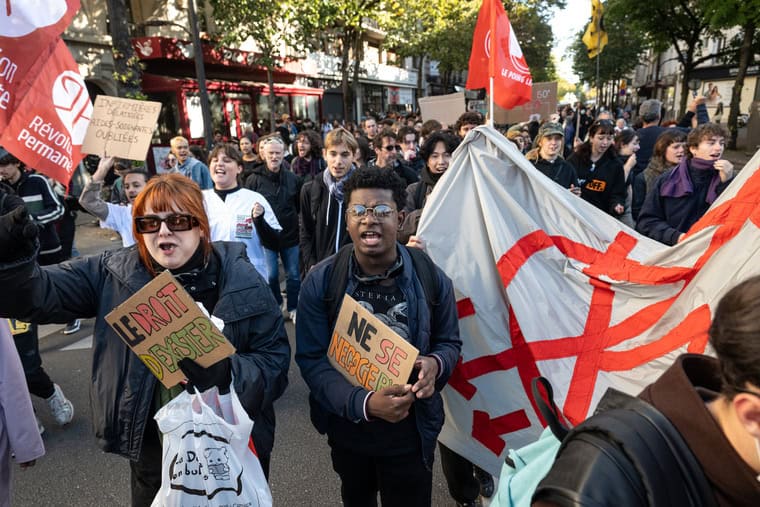
Teenagers in France have brought the system to its knees, battling vicious police, occupying their schools and even organising to take on rising fascism.
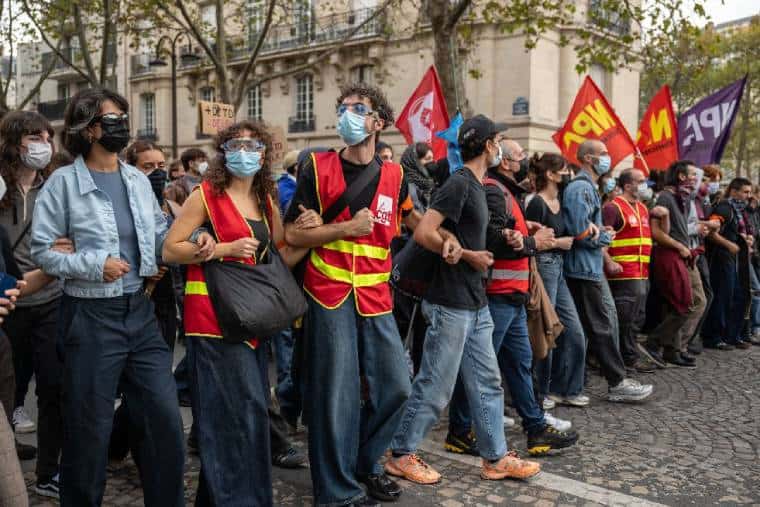
An estimated half a million joined protests across the country in a single day last week, and more is to come.
The government is in disarray and seems to have no idea how to respond. It is so fragile that it could collapse at any time.
Meanwhile, in India, a revived Cockroach movement, led by students, is back on the streets. The mass campaign that began in opposition to corruption in education now fights the right’s attempt to tamper with the right to vote.
It has already inflicted more damage on Narendra Modi’s government than decades of pallid opposition by the mainstream parties.
From Albania to Argentina, and from Colombo to Casablanca, recent years have seen an explosion of young people’s anger. But what is it that’s special about young people? And what is it that is making them radical?
The repeated failures of neoliberalism are a big part of the explanation. In the 2020s, young people increasingly feel like they have no future.
The planet now burns every summer. Services are slashed while arms budgets bulge. And the promises of a bright future are long gone.
The cost of living is rising while wages are pitiful—that’s if they can even find a job. The lucky few are likely to be in part-time roles or on zero hour contracts, and working well below their skill level.
In Britain those that go to university emerge with debts of around £50,000. They will spend the rest of their lives repaying them.
Young women are told that if they work hard enough, they can smash through the “glass ceiling” and make it to the top.
But in reality women, who now make up the majority of university students, are simply taking on the majority of that student debt.
And when they join the workforce, they find that women’s pay and conditions remain stuck in a previous era.
For the young, there’s little hope of getting on the property ladder—so rip-off, privately-rented flats are for life, not just for your twenties. And without pensions or savings to fall back on, the future for young workers is bleak.
Mainstream politics barely recognises these issues as problems, let alone produces solutions. Instead, they blame younger generations, calling them “lazy” and “snowflakes”. Young people feel like they have no voice in the traditional halls of power. This drives them towards the front lines of both suffering and struggle.
Long before neoliberalism’s crisis, capitalism already failed the young. And we know that historically many of the biggest confrontations with the system have been led by them.
Under-25s often have more room in their lives for activity than older generations. They tend to have fewer responsibilities and more time and energy, freeing them to take part in struggles and campaigns. The decades of drudgery, exploitation and political betrayal don’t weary them the way they do many older people.
But it’s not inevitable that crisis pushes young people to radical places, or even to the left at all.
Large numbers of teens and young adults, especially men, are moving to the right. Online figures, such as Andrew Tate, offer them an explanation for why they feel so adrift, and tell them that their lot in life is not their fault, but society’s.
Those trapped by this narrative locate the causes of their misery in completely the wrong places, blaming women and blaming the left, rather than the neoliberalism and political class that are really responsible.
In Germany, for example, around a quarter of young men plan to vote for the Nazi AfD party, according to recent polls.
That’s proof that political polarisation happens in both directions in periods of crisis and uncertainty.

The far right thrives on a sense of hopelessness, but instead of being crushed by misery, many young people have dreams about what society could be like.
The climate movement, for example, during the 2010s, was driven by young people and school students who refused to let their future be burned by fossil fuel-hungry capitalists.
For them, there was no other option than to try and make change. The only alternative was to inherit a dystopian world.
And that same spirit is alive in the fight for LGBT+ rights. Young people who insist that we do not need the oppressive and restrictive gender roles of modern society have led this movement.
As well as standing up against deeply entrenched homophobia and transphobia, they dream of a new society, with new ways of living and loving.
The questions of Palestine and imperialism, and the threat of fascism, remain some of the biggest mobilisers of young people today.
So, it is hardly surprising to see the students in France wearing their keffiyehs on the school blockades while chanting their hatred of Marine Le Pen.
For them, and for millions of others, all these questions have come together. They are all products of a hated system.
Yet despite the way they are depicted, young people are not a class, and certainly not a monolith. Simply being young and caring about politics doesn’t give a group any inherent social power.
Under-25s are divided by politics, of course, but they are also divided by their class backgrounds. Oppression too has an impact. The French events have highlighted that brilliantly.
School blockades began in the poor banlieues suburbs, led by some of the poorest and inevitably the most racially diverse students. They then spread across the country to encompass even some elite universities.
Many on the barricades were quick to admit that while conditions in their school were poor, it was those in the suburbs that really bore the brunt of the government’s neglect and police brutality.
So, even in wealthier areas, the school strikers said they were fighting for those at the bottom first and foremost.
The government has long understood the value of race and class divisions.
During the 2023 riots against police violence, interior minister Gérald Darmanin denounced the youths in blatantly racist terms.
“Personally, I use the word ensauvagement and I repeat it,” he said, effectively calling those on the streets “savages.”
In France, we again see polarisation, with around 47 percent of people under 35 saying they support the radical left candidate Jean-Luc Mélenchon, while 22 percent back the fascist Le Pen.
These political and class divides mean that it should be obvious that young people cannot change the world alone. Luckily, they don’t have to.
Millions of older workers in France, and well beyond, share their disappointment and rage. They know what it is to be promised the world but given nothing.
For them, the young rebellion has rekindled their hopes and their dreams.
It has shown that struggle opens a world of possibilities.
That is crucial because it is workers, through their ability to halt production and choke the flow of capital around the world, who do have social power.
Some compare the current student protests to those of May 1968, when French students rose up in anger over their conditions.
Crucially, the rebels then managed to pull some young workers with them.
That began a process that ended in some 10 million French workers striking for two weeks in support of the students’ demands—and adding their own.
It ground France to a halt and even forced the president to flee the country. Young people across the world today have the potential to bring about even deeper change if they can again ignite the working class.
Student movements nowadays represent people from a much broader range of backgrounds than those of 1968.
Many are themselves from working class families, and some cut their teeth fighting against racism and police harassment.
By rejecting the naturalisation of capitalism as the only way for us to live—and embracing revolutionary hope—young people can inspire older generations to join in their struggle.
That means connecting the issues so vital to young people to those of the wider working class.
And it means bridging the gap between economics and politics that the capitalist class imposes on us.
Students bursting out of their schools and campuses can inspire the working class into solidarity—and action of its own. That is the chance for real change that the rebellion of the young represents.


Workers and students unite in a huge general strike
French students blockade schools ahead of the general strike on Thursday
A necessary step towards working class power