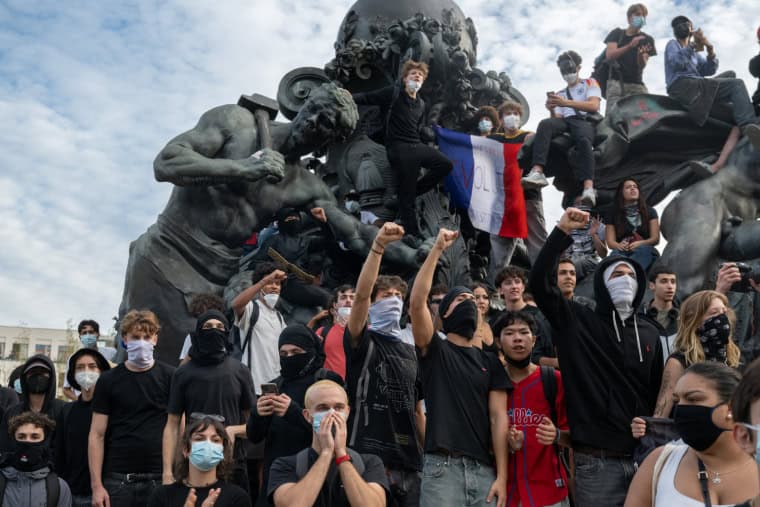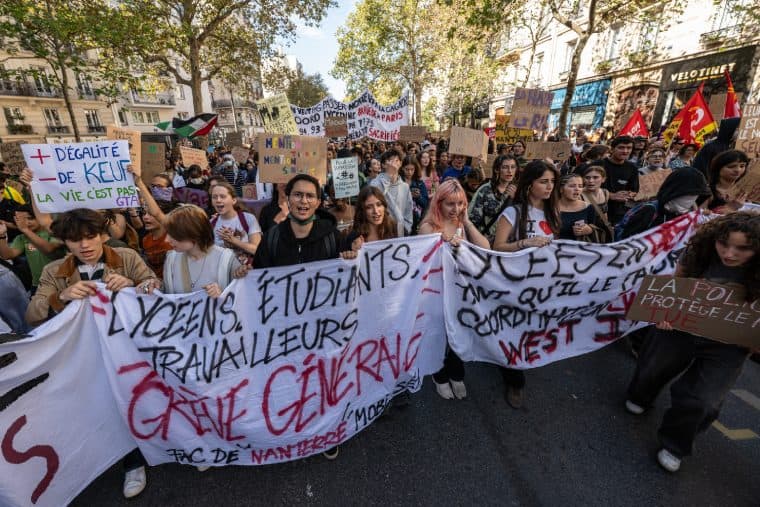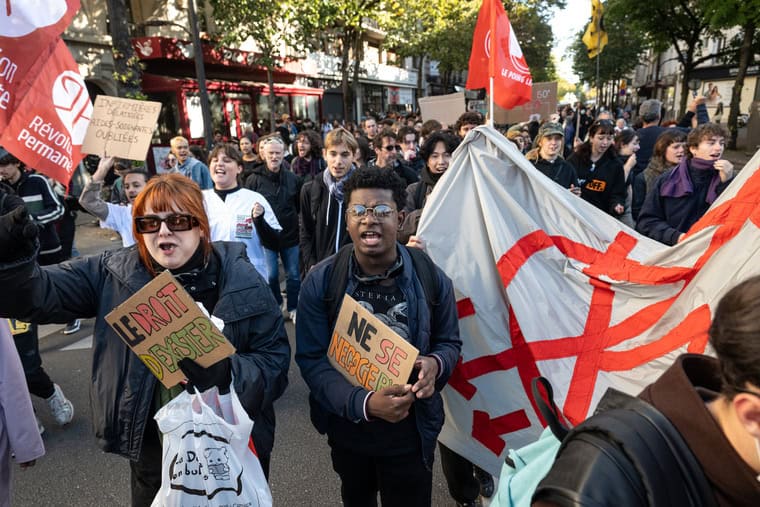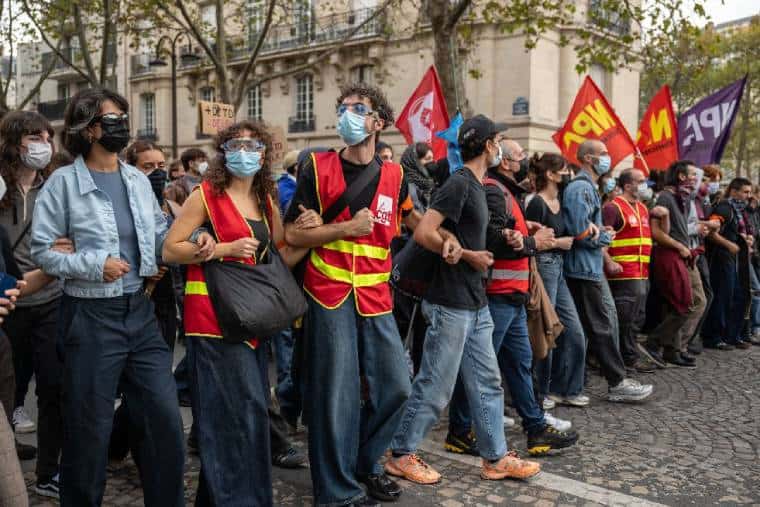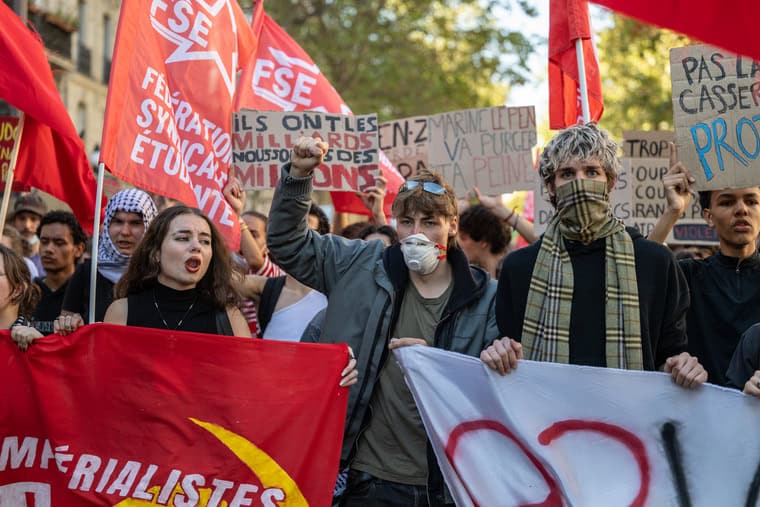
After weeks of blockades and protests, France is gearing up for more action (Photo: Guy Smallman)
We’ll keep blockading until the demands of the high school students in the poor suburbs are heard.
We’re lucky where we are, it’s good, even if there are obviously things to improve. And the Parcoursup higher education admissions system is tough for everyone.
But we’re here to show solidarity with others and we’ll try to continue as long as we can.
The unions have decided to strike next Tuesday, so I think that will be the next big demonstration.
Actually, I don’t know what will happen next because we’re organising ourselves day by day.
Like, in the morning we ask ourselves what we’ll do in the afternoon, we blockade the school until classes are cancelled, and then we decide. So it’s difficult to answer.
It depends on what actions are called and what others will do.
People don’t care about the token concessions the French government has made to the protesters.
They’re just a slap on the face.
The movement’s next step was calling Tuesday’s demonstrations and strikes which will be huge.
After the previous Tuesday’s strikes, union leaders called for the next day of action to be on 5 November. They were trying to get to the head of the movement and impose the next date.
But they had to change their minds and call for a strike on Tuesday. The movement was so strong that they had to change their minds.
I’ve never seen them do that before. Usually they name the date and we all have to wait for them.
And everyone is talking about Saturday 17 October. We have no idea what will happen on that date, just that people are ready to protest.
It’s coming from below as well. Many young people relate to the Gilets Jaunes, the Yellow Vest movement, that began in 2018 over the cost of living. They want to do the Yellow Vests again. The situation is incredible.
Thousands of people came out in the Place de la République on Thursday and then tens of thousands went to the Bastille and then marched off again to another square.
The police couldn’t do shit. People are more angry than they are afraid of the police. At the blockade where I was no-one was running away from them when they were using tear gas.
People are chanting everywhere “La jeunesse emmerde le Front National”—“The youth tell the Front National to fuck off”. It has become the anthem of the movement. It shows the potential.
But if we don’t use that energy directly against the fascists and block them from leafleting and meeting in town squares it won’t harm them. It won’t stop them leading in the polls.
The lesson of the past decade is that you have to confront them. Chanting that you are against them is not enough.
As revolutionary socialists we don’t think that elections change things fundamentally. But they do matter. The fascist Rassemblement National (RN)—as the Front National has renamed itself—might really win.
Left wing presidential candidate Jean-Luc Mélenchon and the LFI party have a strategy. People are chanting about Mélenchon on the blockades.
The LFI mayor of Saint-Denis, Bally Bagayoko—who got teargassed protecting protesters from the police, has become a kind of hero.
They are not softening their stance. They are for Palestine, against racism and against the system.
Of course they are reformist. And because they want to take over running the state they are patriotic.
But people support them because they want to see a fight. And we are with those people. Calling for a vote for him is a way to say “we are with you”. But at the same time it’s not enough just to vote.

Photo: Guy Smallman
I think there are two main problems we have to face. The first is union leadership. They initially decided on another strike day for 5 November—which is very late.
Sometimes the workers are not sure that the movement is bigger than them. Now we are starting to feel we have the strength.
Nationally, the CGT union federation decided to push for another day of mobilisation, but for now it’s just for the education system. It’s good, but it’s not enough.
There needs to be more strikes in more sectors of work. We need to do the work in our unions to push them to meet with other sectors of workers.
Secondly, the movement also has to understand the danger of the fascist RN, which is also using the movement to draw support. It is saying the students are violent, and are it is making racist attacks. We have to counter that.
Also, the directors of our school decided to propose yesterday night to engage in discussions with representatives of the students.
It’s bullshit, but it gives the impression that the state is listening—that it is possible to achieve their demands without fighting, just with talk.
Some teachers are still against the movement. But I think that, because of the repression and violence, the majority of teachers are starting to ask questions. What happened? Why the violence? Why can’t we grant the demands?
All secondary schools are closed by the administration, so the blockades don’t mean anything right now. There’s a lot of secondary school students who want to go further.
I think the next step for us is the occupation of high schools and campuses for days and days. It is clear that the mobilisation is going in the direction of occupation, even though blockades are still happening. Now that we’ve blocked the school system, it would be great if we could re‑appropriate it for ourselves.
In other cities, students have already started occupying their campus—we all know it’s time to move to something bigger.
Directors of secondary schools have been trying to discuss solutions with the school unions to encourage reformism. Because student unions were organising the general assemblies and blockades, we gave them the place of leaders, but now we are putting this place in question.
If we lose the roots of the mobilisation—the secondary schools—as they start discussing with school boards, we lose the whole movement.
But at the same time, the whole country has come to the realisation that their conditions of work aren’t good enough.

Photo: Guy Smallman


Workers and students unite in a huge general strike
French students blockade schools ahead of the general strike on Thursday
A necessary step towards working class power