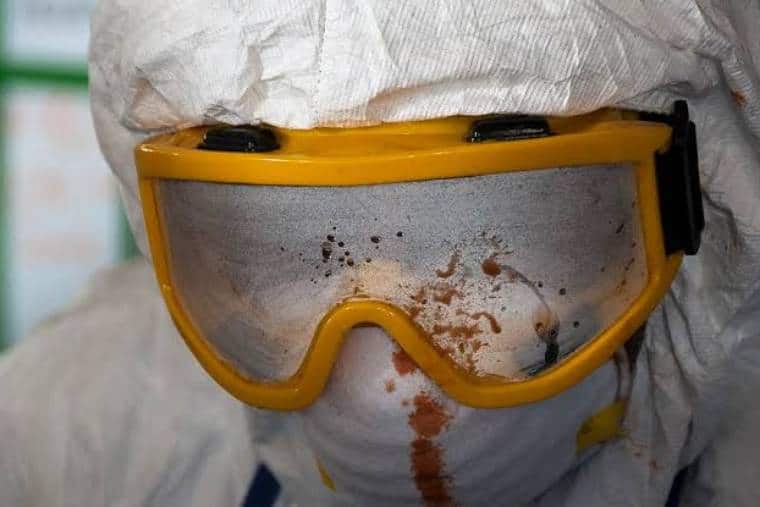
Health workers in Congo’s Kivu region (Pic: World Bank Photo Collection)
The Democratic Republic of Congo (DRC) recorded a grim milestone this week as its government announced that confirmed Ebola cases there have surpassed 10,000.
Already some 5,000 people have died from the latest strain of the disease, caused by the Bundibugyo virus. Cases have been recorded in 66 health zones across eight provinces, up from just three health zones in mid-May.
That makes it the fastest growing outbreak in the country’s history, and the second largest and deadliest on record. The 2014-16 epidemic saw 28,600 infected and more than 11,000 dead within two years.
Now, many fear that the new epidemic will break this terrible record.
The news came as the outbreak continued to spread beyond DRC’s borders, with a confirmed case in Abuja, one of Nigeria’s largest cities.
That makes Nigeria the fifth country to detect the disease, with Kenya, Uganda and France also reporting cases. Kenya, which announced its first case earlier this month, has now had nine active Ebola infections and two deaths.
About 80 percent of new cases in central Africa are coming from outside the chains of transmission that health authorities are monitoring.
The Africa Centres for Disease Control and Prevention (Africa CDC) says at least 95 percent of cases must come from the known contacts of infected people for the outbreak to be considered under control.
That raises the alarming prospect that we may be recording only a fraction of the real number of Ebola infections and deaths.
Yet there are precious few words about the crisis in the British media.
In a desperate bid to get the world’s attention this week, Dr Jean Kaseya, Africa CDC director, compared the rapid spread of Ebola with Covid-19.
“We shouldn’t forget that at the beginning of Covid, many countries said there was zero risk of being affected,” he said. “But a few months later, they became the hotspot. We don’t want to see Britain and other countries become the hotspot.”
Kaseya’s plea is that major powers recognise the danger and plough medical and logistical resources into central Africa.
After several months of frantic efforts to contain the disease’s spread, many treatment centres in the DRC are completely overwhelmed. Those in remote areas are short of protective equipment, medicines and staff.
Al Jazeera reports that, “Many teams lack adequate vehicles and struggle to persuade families to hand over the sick for treatment and the dead for safe burial.
“At least half of those who have died were never admitted for treatment.”
The West could provide those badly needed vehicles. It could supply the medicine and equipment. And it could share staff to work directly with African experts.
But instead our leaders pander to racist and right wing fury by cutting aid budgets.
Labour announced in February last year that it would reduce official development assistance from 0.5 percent of gross national income to 0.3 percent by next year.
That’s a cut of around £5 billion—money that should be used fighting this deadly epidemic.
The record of the US is worse. In his second term, Donald Trump slashed foreign aid from £36 billion to just £8.8 billion and closed down the USAid organisation.
Axing USAid is likely to have delayed detection of the Ebola outbreak because disease surveillance programmes were shuttered as a result. Laboratories essential for testing were also closed.
In addition, foreign aid paid for local health workers involved in emergency response work.
But Western leaders simply avert their eyes from others’ pain. Black African lives are cheap and their deaths easy to ignore.


French students blockade schools ahead of the general strike on Thursday
Plus readers on fighting the far right in Glasgow, Trump's tariff war and arms spending