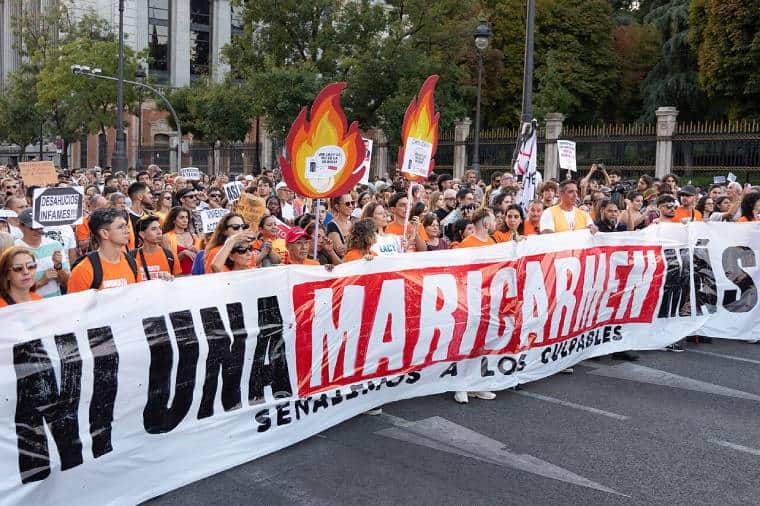
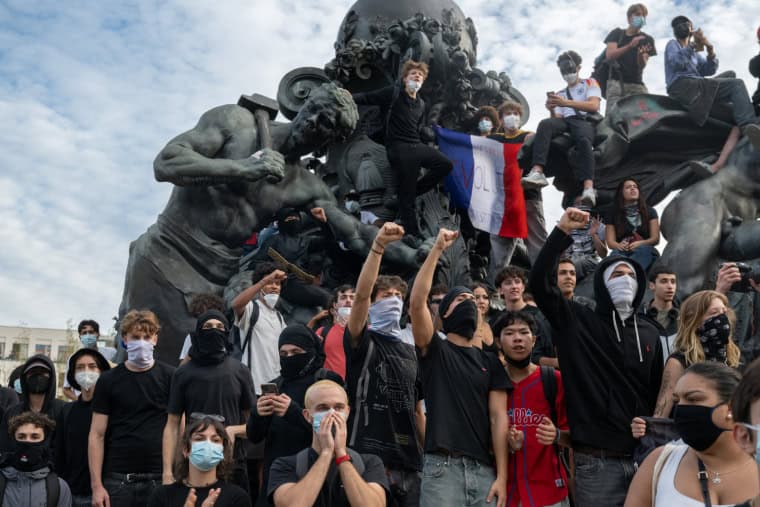
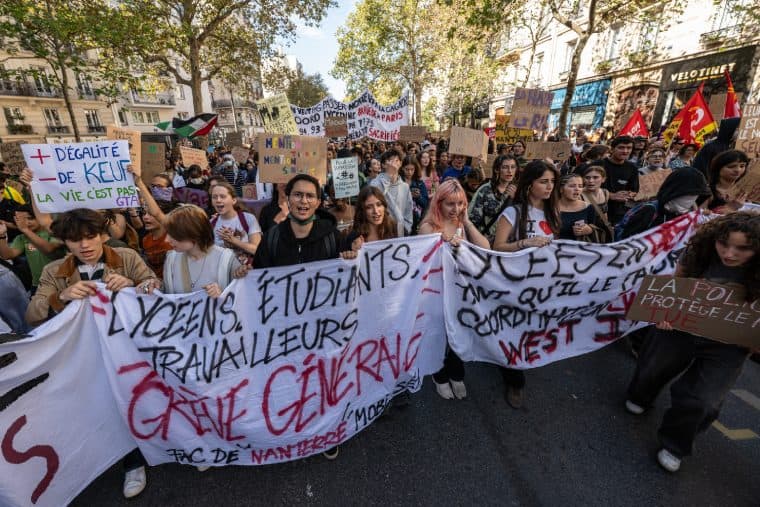
On the march in Paris on Sunday ahead of the general strike in France
Over 100,000 workers joined a demonstration in Paris on Sunday—and major French trade unions are preparing for a mass strike on Tuesday. It is a major challenge to the pro-boss government of president Emmanuel Macron.
At the heart of the resistance is a strike by oil refinery workers at Exxon and Total over pay that began on 27 September. It closed more than half of France’s refineries and led to petrol stations running dry in many areas. Workers at several nuclear power stations also struck.
The state mobilised to smash the action. It began by releasing strategic fuel stocks, allegedly created for military purposes during an emergency. Then it upped imports—including from Russia, despite sanctions against Vladimir Putin’s regime.
According to data from the British consultancy Vortexa, until recently 17 percent of France’s diesel imports came from Russia. These increased to 40 percent in early October. When this didn’t break the strikes, the government “requisitioned” strikers—ordered them back to work using the threat of jail.
The central state’s local representative—known as a prefect—can “requisition any property or service, require any person necessary” to maintain public order and safety. The law was passed in 2003 during the “war on terror”.
If workers ignore a requisition order, they could face six months in prison. The CFDT union at Exxon ended the strike, despite rank and file opposition, almost immediately. But CGT union members in northern France bravely kept striking.
And in a brilliant example of solidarity, workers at Compagnie Industrielle Maritime, the Le Havre “gateway” for fuel to the refineries in Normandy, decided to halt the transport of crude oil to strike-hit plants.
Mathias Jeanne, a CGT union activist, told the Revolution Permanente socialist website, “We have links, we know the comrades. For the moment we are not on strike. But we have warned the management there will be no more distribution to Exxon and Total, we took this decision in a general meeting on Friday. ”
Workers at the Marseille-Fos port in southern France, the third largest petroleum port worldwide, are also blocking at least some supplies.
The strike on Tuesday is set to see rail workers, other transport workers, civil servants and school workers walk out. Groups of care workers, car workers, supermarket workers and others could also strike.
Strikers are putting forward their own demands over pay and also want to defend the right to strike. In many parts of the world—including Britain—governments facing economic and political crises are using anti-union measures. The French response, if it is carried through with wider strikes, shows the way to win.
The march on Sunday combined demands over the high cost of living and environmental issues.
It was called by Jean-Luc Melenchon’s Insoumise party and supported—although grudgingly—by the other elements of his Nupes coalition of green and socialist parties. Organisers said 140,000 took part. The unions at a national level were frosty towards the initiative, although some local branches backed it.
Germinal Lancelin, a leading union rep from the striking refinery in Port-Jerome-Gravenchon, Normandy, did speak. Tuesday should be the beginning of a major revolt that can defeat Macron and show a positive alternative to the fascists of Marine Le Pen.


Unions have called a general strike
Interview with a member of French revolutionary socialist group Autonomie de Classe