An 18-day general strike in Guinea, West Africa, has won concessions from the dictatorial regime of President Lansana Conte.
After three days of talks with union leaders and civil society leaders, Conte agreed to hand over some of his powers.
The deal reached also provided for a lowering of fuel and rice prices – although Conte made these same promises after strikes in February and June last year.
Since he sacked the last prime minister in April 2006, Conte has combined the roles of head of state and head of government.
But after long negotiations on Friday he agreed to appoint a new prime minister.
Nobody has yet been named for the position.
The new prime minister must be in high standing and ‘not have been implicated in the embezzlement which has brought the country to chaos,’ Ibrahima Fofana, secretary general of the Guinean Workers Union said. Fofana added the strike was a ‘success’ because it showed that Guineans are a ‘social force capable of changing the regime’.
The unions showed their power and their ability to act as the spearhead for everyone who wanted change.
It’s regrettable that they didn’t demand that Conte and the rule by the elite was entirely eliminated. Guinea’s workers made huge sacrifices during the strike with at least 59 killed and hundreds injured by state forces.


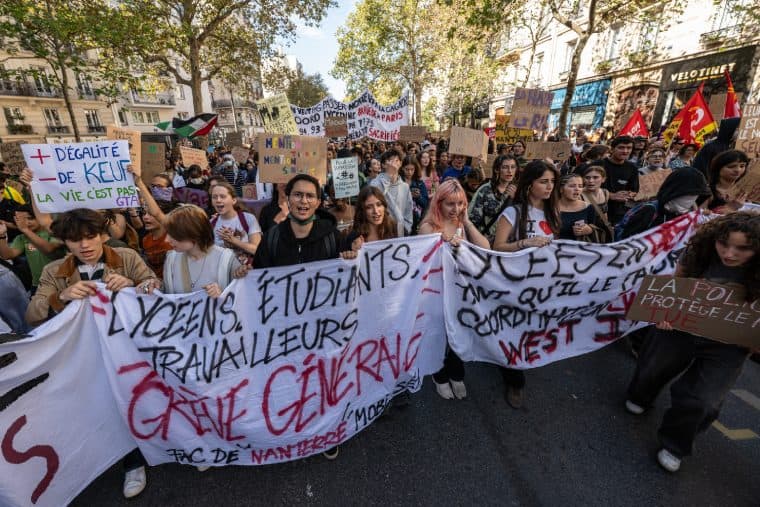
Unions have called a general strike
Interview with a member of French revolutionary socialist group Autonomie de Classe
The real violence is coming from the racist thugs in uniforms