Drivers at private operator Ouigo are on strike (pic: Wikimedia commons)
Train drivers in the Spanish state struck this week after Europe’s deadliest railway disaster in more than a decade.
At least 69 people died after two trains collided in the central province of Toledo on Tuesday.
The Semaf union had already called a 24-hour strike on Renfe, the state-owned operator, Thursday to demand investment into the unsafe network.
The following day, drivers on private operator Ouigo struck—and were set to walk out again on Monday.
Spain’s railways were opened to privatisation in 2020 at the behest of the European Union, which imposes free market policies on member states. They’re divided between Renfe, who runs the lion’s share of routes, and Ouigo and Iryo.
Diego Martín, a Semaf member said, “We will continue demanding the necessary measures to make this sector safe again.
“It must have all the safety systems required to maintain the quality standards we have always had.
“We cannot tolerate, under any circumstances, this type of incident happening again.”
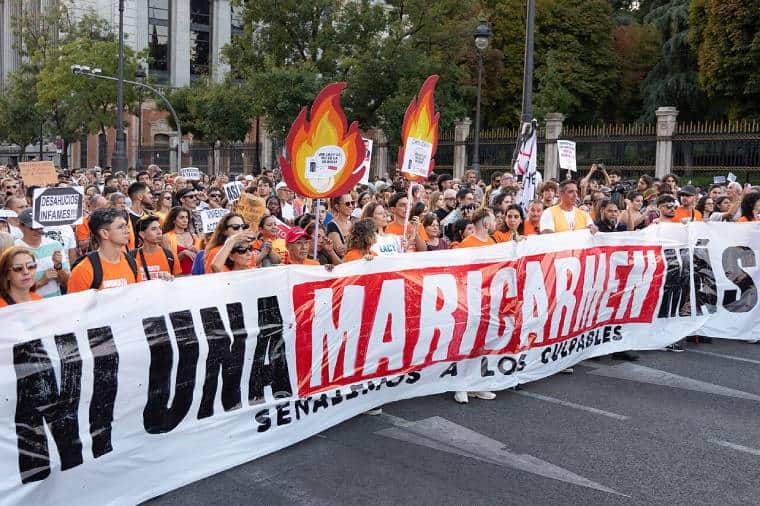
The rail disaster comes amid a revolt over housing—and ahead of a general strike on 11 November.
Train drivers are furious with transport minister Óscar Puente, who was quick to blame “human error” before an investigation.
The Labour-type PSOE government has championed Spain as a model for “liberalisation”—selling off railways to private companies.
His predecessor slammed other EU members for “unjustifiable obstacles to rail liberalisation”.
Vicente Almenar, a driver and UGT union member, wasn’t convinced by Puente’s words. “Human error? How can the minister say that?” he said.
“What the minister has done is really unacceptable. He’s just shifting the blame outside his area of responsibility.”
He added, “Human errors occur when you don’t have the equipment you need to do your job.
“Zero risk will never exist. But when you have the proper tools, you reduce it as much as possible.
“The necessary investments haven’t been made here—there’s a shortage of staff, of experienced people.”
The right has rushed to capitalise on the disaster to grab votes in the snap general election next month.
Far right party Vox has brought a private prosecution against the train operator for “reckless homicide”.
PSOE was forced to evacuate its offices in Madrid after far right protests over the crash were called on social media.
But the far right has no answer to the rail disaster—it wants to make deeper public spending cuts if it gets into office in next month’s election. A coalition of the Tory-type PP and Vox shut down emergency response services in Valencia, leaving people more vulnerable to catastrophic flooding in 2024.
David Karvala is a socialist and campaigner with United Against Fascism and Racism in Barcelona. He told Socialist Worker, “There is real hypocrisy from the right who want to blame the government when they are the worse for cutting services.
“But this government has been handing contracts to private companies, who subcontract jobs on down the line.
“Rail workers’ unions are saying that the work should be done directly to have safety.”
Only 16 percent of Spain’s 1.5 billion euro revenue from high-speed trains goes towards upkeep of the infrastructure. This is well below the European average.
The Toledo disaster is the second deadly rail crash in the Spanish state this year. In January, a high speed train on the same railway line derailed near Cordoba in Andalusia in the south. The crash killed 46 people and injured 152.
Both train disasters involved a Renfe and Iryo train. Both took place on the oldest high-speed route in the country which links Madrid and Andalusia. At least 18 incidents have been reported on this track over the past three years.
In January, Semaf called a three-day strike for better safety measures. It was called off after a day when the workers were promised more investment in safety and jobs.
Now it must keep escalating the action.


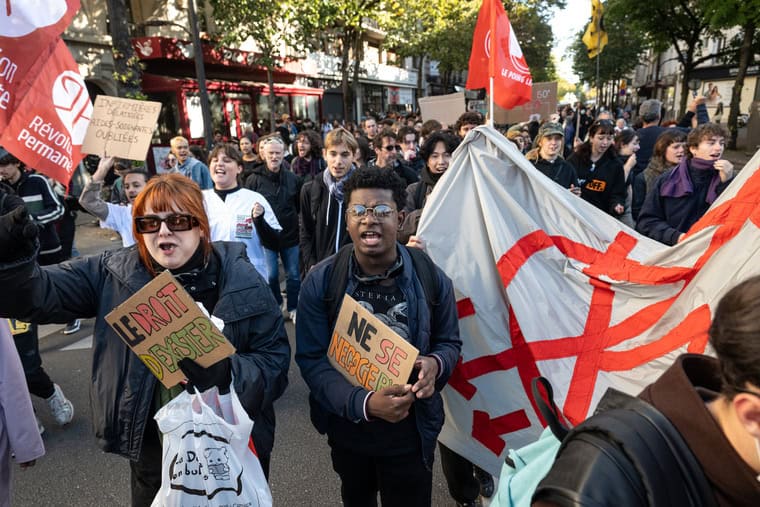
French students blockade schools ahead of the general strike on Thursday
Plus readers on fighting the far right in Glasgow, Trump's tariff war and arms spending