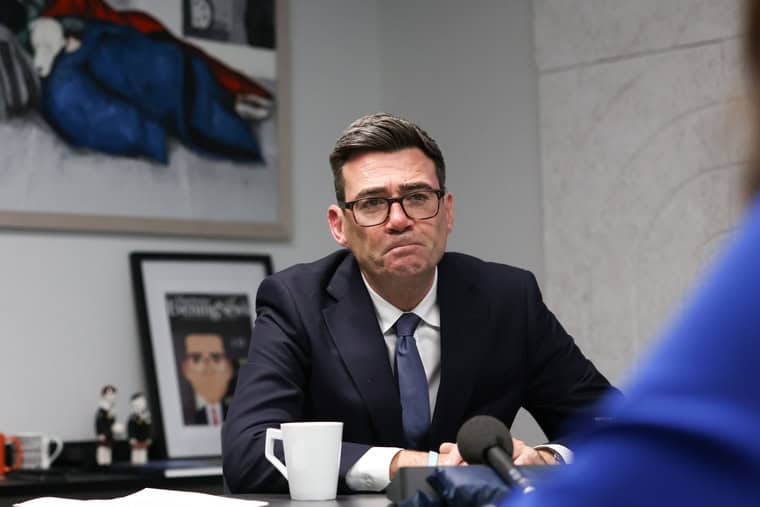
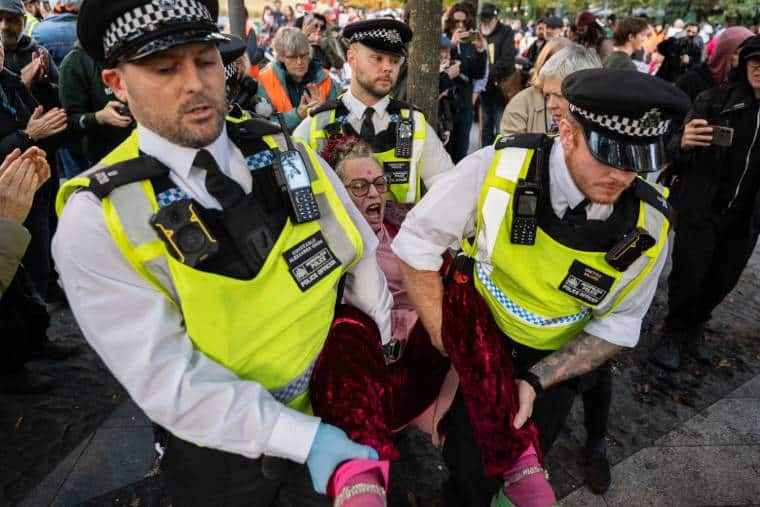
Marching on the eve of budget day (Pic: Dave Gilchrist)
When he was elected as prime minister, Andy Burnham promised us a break from the last 10 years of “drift”.
But chancellor John Healey’s much-anticipated budget on Wednesday was a budget of very little change.
Healey spoke endlessly of giving us “breathing space” from the cost of living crisis. He talked of a break from the Keir Starmer era.
But he also talked at length of “global uncertainties”, such as Donald Trump’s war on Iran, to dampen expectations.
Healey has deferred several significant decisions until after his budget. Instead he gave us a flotilla of small announcements, none of which added up to much more than a tin of tariff-free beans.
Healey had already announced the pledge to spend an extra £432 million for a programme aimed at giving every rough sleeper in England a route off the streets by Christmas.
And unpaid carers will no longer lose their entire Carer’s Allowance if they earn more than 1p over the £204 allowed. Instead, there will be a tapered payment.
Healey promised a £100 payment for 20 million households in council tax bands A-D to help deal with rising energy bills.
The cut in VAT on electricity bills will be extended beyond April to July. That amounts to £50 a year.
Standing charges will be removed from household gas bills, with costs added to the unit rate instead.
But our bills are still going to rise to £2,000 a year. Millions will be driven further into debt, despite Healey’s tweaks.
Healey says he will fund his small changes by taxing banks. The bankers squealed that the tax was a “stupid surcharge on these engines of growth”.
But the increase in the surcharge on profits was smaller than the sector had feared and will last only 15 months. Shares in British banks rose amid relief that the taxes remained so low.
Healey promised to work to make bills “fairer” next year. But making bills “fairer” would mean challenging the banks and energy companies that make billions every year.
Labour’s election manifesto committed to scrapping “discriminatory” age bands, and to increasing the minimum wages for 18 to 20 year olds so young workers are paid the same as those over 21. Healey broke this promise—18 to 20 year olds will still earn nearly £2 an hour less.

And the 3.9 percent rise is below the rate of inflation for the lower paid, who spend a greater proportion of their income on food and energy.
Labour has pledged to remove import taxes on more than 100 products, including gherkins and marmalade.
There is a new tax-free allowance for low-income pensioners. But promises to protect the pension triple lock are guaranteed only for the lifetime of this government and not beyond.
Healey had already announced the extension of parental pay. More than 150,000 parents, including self-employed dads and partners, will now be entitled to two weeks of support worth up to £194 a week. This will make little difference to the huge financial difficulties facing parents.
Healey is pretending that he is listening, that he understands the crisis many working class people are facing—but without delivering any significant changes.
Burnham and Healey are under pressure to deliver changes that can win back voters driven away by Keir Starmer.
But they are unwilling to take on big business and the bond markets, which demand “fiscal responsibility”.
So Labour is relying on low to no cost measures that don’t make a substantial difference to working class people’s lives.
The bosses’ newspaper, the Financial Times, reported that Healey’s focus was to reassure the City of London bankers and business.
In total, the budget means an immediate pledge to spend £7.6 billion. That’s a small figure compared with the £66 billion announced in former chancellor Rachel Reeves’s first two budgets.
As Healey finished delivering his budget, the Office for Budget Responsibility (OBR) forecast no real earnings growth in Britain next year.
That means inflation will devour every crumb of pay rises workers win next year.
Trade union leaders said Labour needed “bolder” policies to tackle the cost of living crisis. On the eve of the budget, Unison union leader Andrea Egan said, “These are welcome measures. But the cost of essentials, including food and fuel, is going to keep soaring.
“That’s why we need to see a bolder approach based on making the wealthy pay their fair share and improving the lives of working class communities in a more enduring way.”
Only working class resistance will win such a programme. We need to bring the spirit of France, Spain, Portugal, Albania and India onto our streets.
Hundreds of people protested outside Downing Street on Tuesday night ahead of the Burnham government’s first budget.
They demanded that Labour breaks with austerity and tackles the cost of living crisis.
Unison union member and health worker Jordan told Socialist Worker, “The government has said they will give NHS workers a 2.4 percent pay rise.
“It’s not enough. We need a rise above inflation and we need that kind of thing across the board.
“We’ve seen things cut back for nearly 20 years now and we can’t continue down the same road with more cuts.”
A member of the NEU education union in Lambeth, south London, said, “Austerity is a political choice.
“Families being left unable to pay their rent is a political choice. Children come to school with acute trauma and other needs because of austerity.”
Your Party MP Jeremy Corbyn said that workers’ demands, for better pay and an end to cuts, “are not utopian demands.”
There was a significant turnout of Green Party supporters at the march. Green leader Zack Polanski told the crowd, “The answer is pretty simple—it’s time to tax the rich.
“The chancellor has said that this is a continuity government, but we do not want a continuity government.
“The people of this country cannot survive a continuity government.”
Green councils now face a choice over austerity—to implement cuts or not.
An alternative is to set an “illegal” no cuts budget. But council leaders, including left wing ones, say that would mean government-appointed commissioners stepping in to run the council.
So, instead, they campaign for more funding, but reluctantly implement cuts.
But there is an alternative—mobilising workers and service users to strike, occupy and protest.
Green councillors could help build that resistance outside the council chamber and refuse to implement cuts.
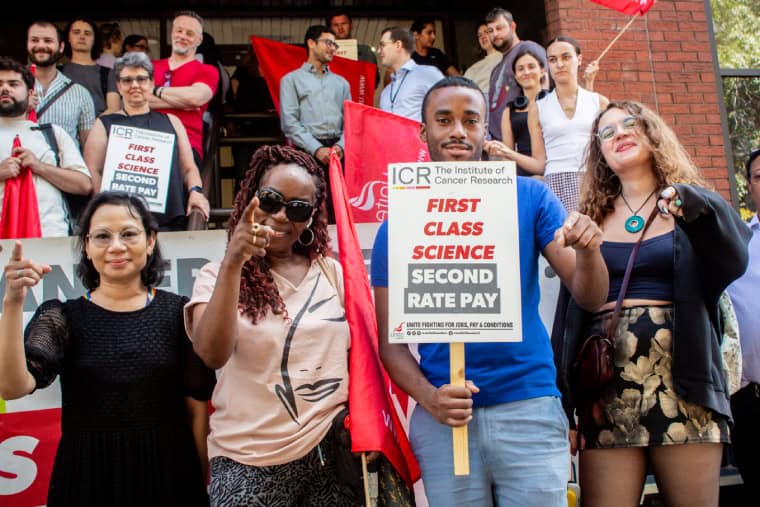
Caitlin spoke about the indefinite strike at the Institute of Cancer Research (ICR) in London. After 16 weeks of action, the Unite union members won pay rises of up to 52 percent.
“We refused to back down or accept less,” said Caitlin. “They told us it was impossible, right up until the day before they gave us every single one of our demands.
“That is what is possible when you take back the power. Through our collective action we have lifted each other out of hardship.”


Why is Labour increasing repression?
Interview with banned author and activist
Home secretary forced to make concessions
Conference takes on fossil fuel jobs argument