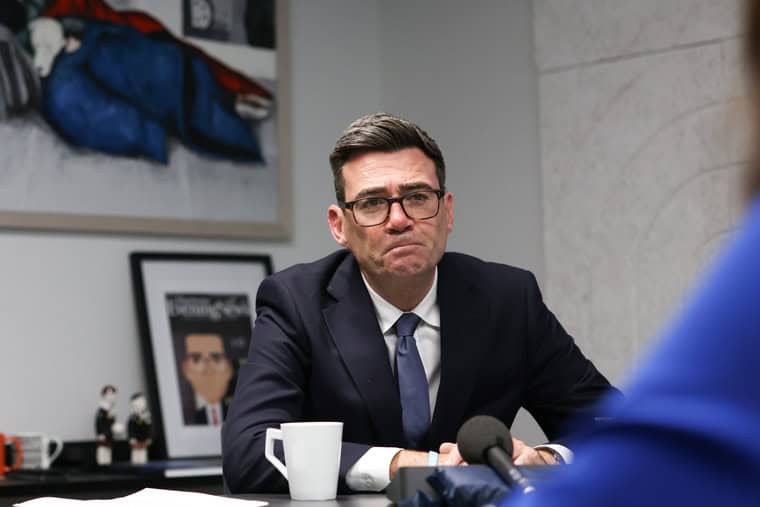
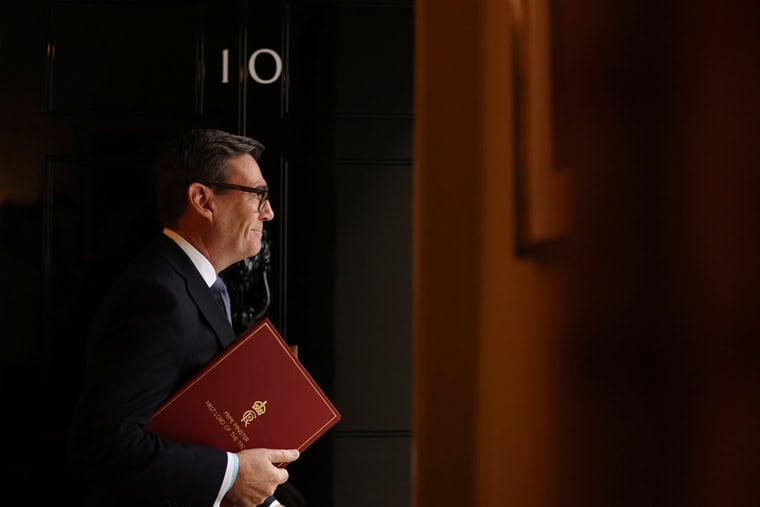
Andy Burnham will cap the price of a bus journey (Photo: AndyBurnhamGM/X)
Andy Burnham’s first week as prime minister will be a breath of fresh air for many.
While one of Keir Starmer’s first policies was to scrap the winter fuel allowance for millions of pensioners, Burnham has promised a cost of living blitz.
One of his first proposals is to cut VAT on energy bills, a measure he said will give everyone an average of £45 back a year.
Burnham plans to cap single bus fares across England at £2 from January 2027 and to roll this out across the devolved powers of Wales and Scotland. He says, “Good, affordable transport links are an essential. No one should be priced out of those and left behind.”
The £2 cap was put in place in January 2023 by the Tory government. It was upped to £3 by Starmer and former chancellor Rachel Reeves, who said it was not affordable.
Transport secretary Heidi Alexander hailed these changes as “a signal of intent” that “shows you the direction of travel of the government under Burnham”.
But capping fares does little for the millions of people in Britain left stranded with no consistent bus links.
Earlier this year, cuts in Settle in north Yorkshire led to 50 percent of bus services being cancelled. Bus company bosses said this was because of oil and fuel costs amid the Iran war.
For a mainly rural community living along a major transport route on the A65, this means there is now only one bus every two hours. It cuts people off from education, jobs and a social life.
In another move that recognises the deep poverty millions are living in, Burnham’s first announcement was that he plans to end rough sleeping in Britain.
According to the government’s own figures, some 4,793 people slept rough on a single night in autumn 2025 in England, a record high.
And this is just a small fraction of the 382,618 people in England—including 175,025 children—who were homeless as of December 2025.
Burnham’s cabinet has pledged an additional £340 million to support his new homelessness strategy. This will come from unused money in the housing budget.
This pledge has probably drawn the most scepticism, given that Burnham promised and failed to deliver this in Greater Manchester as mayor.

Even Burnham’s moves to appease business owners and bosses fall somewhat short. He vowed on Wednesday to cut 20 percent of business rate bills for pubs, clubs and live music venues from April 2027 onwards. And new chancellor John Healey signalled there would be more support for small businesses in the next budget.
This will affect some 32,000 venues across Britain. In reality though, it will only save them about £1,100 a year—which is what many pubs make in one night.
Burnham has ordered a review of Starmer’s plans to release prisoners early, due to begin in September.
In an effort to ease prison overcrowding, the early release plan would see around 6,000 offenders released early. Some serious offenders would be eligible for release halfway through their sentence, instead of two-thirds of the way through their sentence.
And those handed shorter sentences for non-violent crimes—such as shoplifting—could be released after serving a third of their sentence.
“We did not invest in the prison estate when we should as a country, going back a decade or so when it was clear that there was going to be pressure,” Burnham said on Wednesday. “That has created an unacceptable situation now.”
If the Burnham government wanted to address the prison crisis, there are two immediate steps it could take. It could end the use of IPP—Imprisonment for Public Protection—sentences. These are indefinite sentences. Even those who are released from them can be imprisoned again without trial.
They were introduced in 2005 and scrapped in 2012 after the European Courts of Human Rights condemned them as “inhumane”. But there are still around 2,700 prisoners serving under IPPs.
And Burnham could overturn former home secretary Yvette Cooper’s proscription on Palestine Action, drop the charges against the thousands of people arrested for terrorism and free the non-violent activists awaiting trial for action over Palestine.
Burnham has promised a return to stability after a turbulent period in British politics where he is the sixth prime minister in a decade. He would surely love a return to the era of Tony Blair, who spent 10 years in office.
Blair used the tax revenues from economic growth to spend more on the NHS, schools and public services. It enabled him to enjoy a honeymoon period where he secured the support of a layer of working class people.
Burnham has similarly spoken about “good growth in every postcode and hope in every heart”.
But Burnham is ruling in a very different era from Blair, where there is much less wriggle room to implement reforms.
Economic stagnation means big business demands Labour waters down the mildest of reforms that could hit their profits. It will take a much bigger confrontation with landlords, bosses and bankers to bring the kind of change that working class people would really notice in their bank balance.
And Labour has shown little sign of wanting such a confrontation.
Burnham says that the cost of reducing VAT will come from scrapping the unpopular digital ID scheme. But quickly after this was announced, Darren Jones—Starmer’s fired chief secretary—said that money had not been put aside for the scheme.
Some £400 million of the total £500 million cost of capping bus fares is being diverted from international climate initiatives. NGOs have warned this will deepen the impact of the climate crisis, especially for people in the Global South.

As well as hand outs to ease the cost of living crisis, Burnham has promised Donald Trump that he can use British bases to attack Iran. Wednesday night marked the twelfth consecutive night that the US bombed Iran. And the new prime minister looks set to give the go ahead for oil and gas drilling in the North Sea.
There are things the new prime minister could do. Socialist Worker has called for price controls, pay restoration and a tax on the richest.
We should fight to save existing transport links and implement new ones. We should demand money is diverted from defence and arms spending, not climate and aid initiatives.
But there needs to be much higher levels of working class struggle to push Burnham to deliver.


What now for Greens?
MioCare strikers in Greater Manchester want answers about proposed National Care Service
What do we learn from his speech?