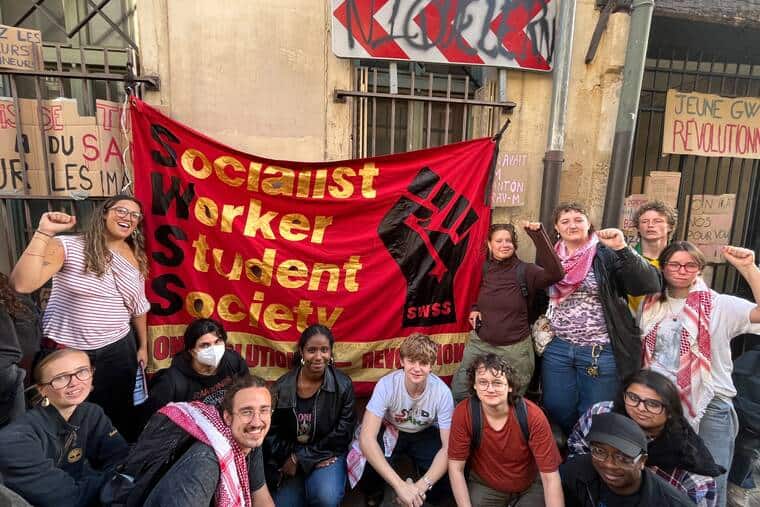
Migrant workers are not a burden on the system—they’re holding it up. (Picture: Creative Commons/ William Hamon)
I moved to Britain over five years ago now. In that time, I’ve rented homes, worked different jobs and settled into a workplace where I’ve now been for nearly four years. I’ve built friendships, nearly finished a Master’s degree and made a life here that I’m proud of.
All of which shows how migrants contribute, put down roots and become part of the communities they live in.
As a Hungarian, I’ve seen what happens when anti-migrant rhetoric becomes the norm. I’m now a trade union activist in Unison and also a migrant workers officer in my branch.
I can see the people I work with facing the very real prospect of deportation. These workers are at risk of losing the lives they’ve worked so hard to build here—myself included.
Reform UK, Tommy Robinson—and even the Labour government—keep trying to push the racist lie that migrants “damage Britain”.
They pretend to protect English workers, feeding off of people’s real, everyday struggles and blaming migrants for low wages, housing shortages and cuts to public services.
But it is the bosses and the rich who are driving down wages and leaving people in precarious living situations. Migrant workers are not a burden on the system, they’re actually the ones holding it up and keeping services running.
Capitalism depends on migrant labour to do the vital, often low paid work that keeps society from grinding to a halt. It’s our responsibility as trade unionists to organise migrant workers and build visible solidarity in the face of these attacks.
We can learn a great deal from Los Angeles, in the United States where unions have taken a central role in resisting immigration raids.
This is a struggle through which real class consciousness and solidarity can develop if we organise and take on racism together.
Orsolya, south London
The split in Your Party is about more than the political differences between the people at the top and their bureaucratic ways of organising. It’s not even just about electoralism.
It’s to do with reformism and parliamentarism more broadly.
It’s true that electoralism encourages reformist parties to drop or water down left wing politics in a search for votes. That pull is strongest on the politicians in those parties whose positions rely on winning elections.
But in a strategy that relies on getting those people elected to parliament, and what they then do there, power and decision making becomes concentrated with them. The bureaucratic and top-down ways of organising flow from this.
That’s why in the Labour Party the MPs are generally to the right of the membership but also far more powerful.
This dependence also leaves the project more vulnerable to splits at the top. The fact that the whole thing can be derailed by hidden arguments among a relatively small group of people points to this fundamental weakness.
All of this emphasises the importance of Socialist Worker’s argument that a new party should put struggle before parliament.
But it also underlines how different that vision is from that of some of the people at the head of Your Party.
Nick, south London
On Sunday, local bakery workers organised a bake sale for Gaza, led in particular by a young woman whose mother is a migrant.
The queue stretched far down the streets, with people waiting for hours in the rain to contribute. Solidarity takes many forms. Buying a cake at a fundraiser may not look as political as joining a demonstration, but they are part of the same struggle.
All reflect the spirit of working class people standing together against oppression and racism. The scale of participation shows a very simple fact—the majority are compassionate and good, not racist or fascist.
The task in our movement is to turn this instinct into conscious anti-racism and anti-fascism.
Driving the fascists off our streets requires immediate and collective action. And if we want freedom for Palestine and to send back the fascists to their gutters, we all must commit to building an anti-racist and an anti-fascist society.
Geraldine, east London
Many of us noticed the spread of English flags across our streets. For some, these might feel harmless. But for many of us, they are stark reminders of the terror caused by the British Empire all around the world, and feel like strategies to keep intimidating and silencing us.
In response, in south Manchester, we have launched Proudly Home to So Many Cultures.
Instead of flags tied to violence and exclusion, we’ve designed an alternative flag that we have hung on several bridges. This is a simple but visible act of resistance and solidarity.
We’re also hoping it will spark conversations about what we should truly be proud of, rather than the empire or nationalism—let’s be proud of our communities and the diversity of people who make them thrive.
By email, Manchester


Plus: Readers on anti-racism in Gosport, driving out the far right in York and Burnham's pension plans
Plus readers on the Palestinian genocide, supporting the RNLI against racist attacks and standing up to Rupert Lowe
Plus: readers on why no socialist should back George Galloway in upcoming by-election
Leeds activists defying state repression