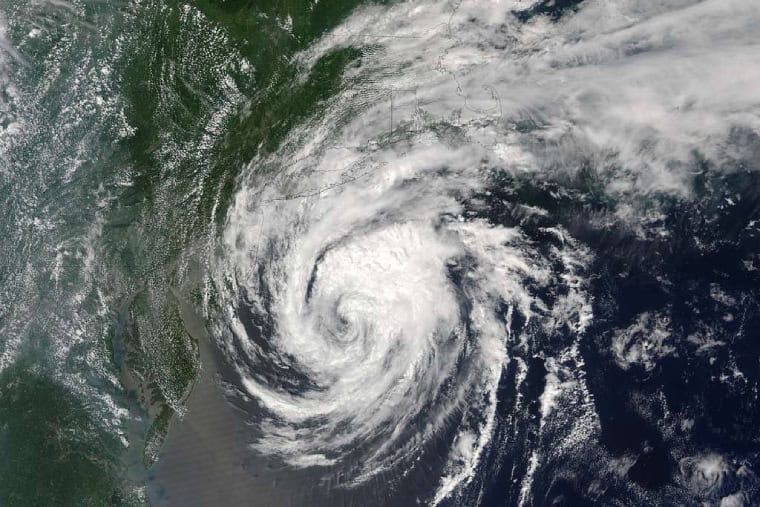
The devastation of Hurricane Helene in Asheville (Photo: Wikimedia commons)
Nowhere in the United States is safe from the climate catastrophe. This is what the disaster of Hurricane Helene showed last week.
The hurricane wreaked havoc across huge swathes of the south eastern US. It was a disaster born out of climate change and the drive for profits.
And it unfolds as climate change deniers in the US government continue to encourage house building in climate vulnerable areas.
As Hurricane Helene hit, bosses refused workers in a plastics factory in rural Tennessee permission to leave early. Raging floodwaters swept away eleven. Only five were rescued alive.
Jacob Ingram, a mold changer at the company, said, “We asked them if we should evacuate, and they told us not yet, it wasn’t bad enough. And by the time it was bad enough, it was too late.”
The death toll from Hurricane Helene has passed 180. As many as 600 people are still missing. More than 1.5 million people spent days without power. Roads were swept away. Hundreds of thousands were left without drinking water.
Deanne Criswell of the Federal Emergency Management Agency (Fema) said, “In the past, damage from hurricanes was primarily wind damage, but now we’re seeing so much more water damage and that is a result of the warm waters, which is a result of climate change.”
Climate change caused over 50 percent more rainfall during Hurricane Helene. A warming climate means a wetter world. Hurricanes now travel further and last for longer.
Avril Pinder, an official in Buncombe County, North Carolina, called Hurricane Helene “Buncombe county’s own Hurricane Katrina”.
In 2005, Hurricane Katrina exposed the deeply rooted race and class inequalities that made Americans vulnerable to climate emergencies. Hurricane Helene has demonstrated that things have only got worse.
North Carolina is known as a “climate haven” because of its mild weather. People who survived Hurricane Katrina moved to North Carolina. Estate agents promoted the town of Asheville as offering a “reprieve” from “extreme weather”. People flocked there as a result. The town is now destroyed.
Asheville is not the only climate haven turned climate disaster. “Climate proof Duluth” in Minnesota was hit by colossal rains in June. Safe, green Vermont was hit by the Great Vermont Flood in July 2023.
Racist rhetoric about “illegal” migrants flooding into North Carolina, which is 1,000 miles from the Mexican border, has made accessing relief harder.
Republican politicians have taken to the airwaves to accuse “illegal” migrants of causing a surge in crime and overwhelming schools and health services.
Nearly half of North Carolina’s migrants have no health care. Information leaflets are not translated, and people are forced to submit to ID checks while they are hunting for their missing loved ones.
Poor communities are always worst hit by disasters. Low incomes and poor housing make them vulnerable. But disasters also deepen existing inequalities.
Fema gives aid disproportionately to whiter and wealthier communities. Black households get less relief than white households with the same damage.
And Fema more often turns down black neighbourhoods for aid or awards less, even where the damage is the same. White Americans living through a disaster see their wealth grow by up to five times. Black Americans see their wealth shrink.
Millions of Americans are living in precarious climate conditions. Some are trying to escape, but many are moving into dangerous areas like the Texas Gulf coast which is threatened by extreme heat and flooding.
And district authorities encourage new developments in unsafe areas in order to expand their tax base.
We cannot run from climate change. We need to tackle it now.


A revived Cockroach youth movement is once again on the charge in India. The student-led mass movement this summer brought down the country’s education minister following scandals in university entrance exams. In a few weeks of struggle the movement did more damage to the far right government of Narendra Modi than the official parliamentary opposition...
Unions have called a general strike
Interview with a member of French revolutionary socialist group Autonomie de Classe