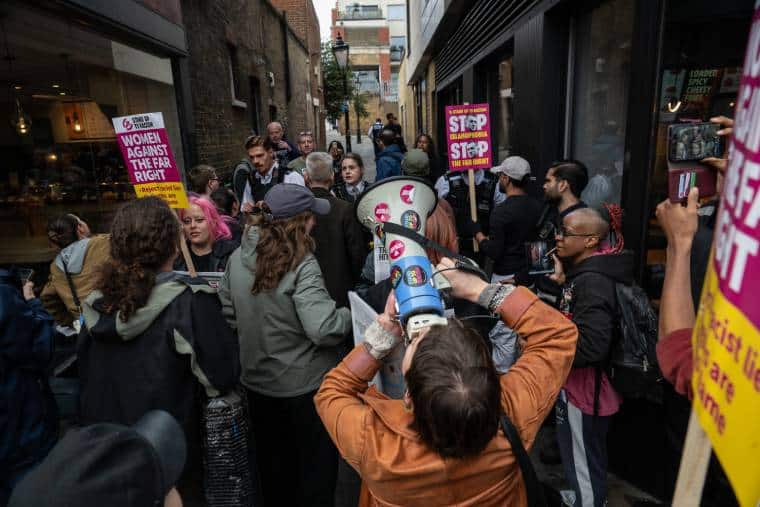
Workers are fighting on a host of issues (Picture: Guy Smallman)
Tens of thousands of workers in 150 universities plan to strike for three days this month in two connected disputes about pensions, pay, workload and inequalities.
On Tuesday the UCU union announced strikes for 24, 25 and 30 November, with a national demonstration in London on the last of those dates to coincide with talks with the bosses. These strike days coincide with Royal Mail strikes, opening up the chance of joint rallies and a joint march on 30 November in London.
Other unions that have strike mandates could also target 30 November for a day of united class action. UCU general secretary, Jo Grady, has also announced that a marking and assessment would begin next year. She added that strikes would “escalate” from February.
Saira Weiner, who sits on the Higher Education Committee (HEC), told Socialist Worker she believes that the body has laid out a plan that “can win this dispute.”
“The latest plan is different and more hard-hitting and will mobilise UCU members throughout higher education. It will surprise and frighten university vice-chancellors as well as bosses’ bodies, such as the Universities and Colleges Employers Association.”
“Our members in their historic and magnificent ballot have told us that they can no longer put up with workloads, the inequality and the casualisation in our sector. Crucially they cannot wait if they are to be able to see their children, pay their bills and keep warm.”
“We urge individuals, other trade unions and political organisations to donate money to UCU branches in higher education and to our national fighting fund.
“When we go out on strike we need everyone to join us on picket lines and show solidarity.”
Saira also made it clear that coordination between other disputes is needed.
“If the teachers are successful in their ballot, we need to fight and strike together, we can force the bosses in education to meet our demands.”
But getting to this point has been no easy task. Rank and file activists in the UCU have fought hard to convince union leaders to agree on the kind of action and strikes that can win.
Past disputes have seen those at the top of the union desperately try and dial back action and bypass decisions made by rank and file members. This cannot be allowed to happen again. Workers must play a leading role in decision-making during this dispute.
“We need to ensure that moving forward UCU branches are fully engaged and involved in democratic procedures,” said Saira.
“We need to organise local strike committees and think about whether we need a national strike committee.”
The stakes are high in this dispute, with unions including the RMT and CWU calling off national strike dates. The UCU must show it’s possible to fight and win.
UCU Left, which Socialist Worker supports, wrote that the Tories know that a victory by one group of workers will open the floodgates to action in every sector and industry.
“Only serious, intense and highly disruptive action can terrify the employers sufficiently to want to settle,” it said.


Israelis are closing in on Umm al-Khair
Plus: Police repression in Leicester
Far right is still a threat
What now for Greens?