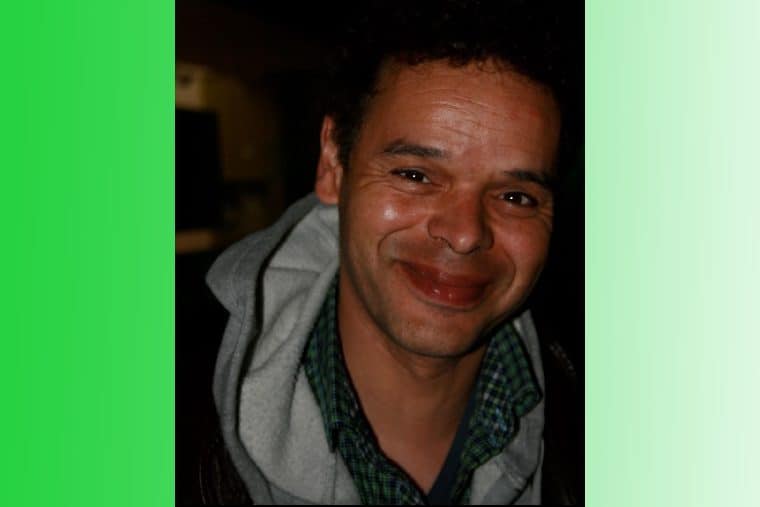
Mike Jackson (left) was part of the “Paras” (Pic: Wikimedia/Creative Commons).
The British media is praising General Sir Mike Jackson, who died on Tuesday, as a “much loved and respected soldier”. He was loved by the British state because he murdered its victims abroad—and covered it up.
Jackson was a captain in the Parachute Regiment—the “Paras”—in Northern Ireland in 1971. In the small hours of 9 August, 600 soldiers closed in on the Ballymurphy estate in Belfast while people fled Loyalist mobs nearby.
Soldiers barged through doors, dragged people from their beds and murdered civilians across three days. It marked the beginning of internment, when the British state could lock people up indefinitely without trial in Northern Ireland.
Soldiers shot Francis Quinn, Father Hugh Mullan, Noel Phillips, Joan Connolly, Daniel Teggart, Joseph Murphy, Edward Doherty, John Laverty, Joseph Corr and John James McKerr. An 11th victim, Pat McCarthy, died of a heart attack. British soldiers had performed a mock execution on McCarthy by putting an unloaded gun in his mouth and pulling the trigger.
Jackson gave evidence to fresh inquests into the deaths between 2018 and 2020. He claimed, “I have absolutely no doubt the Irish Republican Army (IRA) were firing on soldiers and soldiers were firing on the IRA.”
In 2021, the coroner found that all ten who’d been shot were “entirely innocent of any wrongdoing”.
Jackson began the British state’s cover-up immediately. A newspaper article on 11 August—which quoted a British captain—had described the victims as gunmen. But speaking to the inquests, Jackson said he couldn’t remember for certain if the captain was him or not.
So much for Jackson’s claims that the British Army “don’t do conspiracy”.
Five months after the Ballymurphy Massacre, the same British Army regiment murdered people on the streets of Derry. The Paras shot 14 unarmed people dead on a civil rights march during Bloody Sunday on 30 January 1972.
By now, Jackson was second in command of the First Paras battalion—and his murderous, lying role would propel his career further.
Bloody Sunday was a massacre orchestrated from the very top of the British establishment. The Tory government of Edward Heath wanted to break the civil rights movement, which had grown since the 1960s.
Unionist governments ran a one-party, sectarian state with Catholics treated as second class citizens and barred from basic democratic rights. A Labour government sent troops to Northern Ireland in 1969 to shore up this regime.
After the British government introduced internment, the civil rights movement planned a march from the Creggan Area of Derry, through the Bogside to the city centre. British soldiers went to the Bogside and opened fire on the march.
One top British general wrote to another in January, “I am coming to the conclusion that the minimum force necessary is to shoot selected ringleaders.”
Bloody Sunday broke the civil rights movement and saw people begin to look to the IRA and armed struggle.
Jackson wrote a litany of lies about what soldiers did on the day. None of the shots in a list he wrote corresponded to any of the ones that had been fired. The locations didn’t match up to where people had been shot—and some would have meant bullets going straight through brick buildings.
But his list was used in the media and the initial inquiry to “prove” the army’s version of events.
Jackson’s lies were highlighted by a cross examination at the Saville Inquiry, which a Labour government set up in 1998. He couldn’t explain why his list didn’t match up and agreed that someone—whom he didn’t remember—must have ordered him to write it down. “The requirement may have been instigated in London,” he said.
The Saville Inquiry found in 2010 that all the victims were unarmed and innocent and that the shooting had been “unjustified and unjustifiable”. But it let the British state, the politicians and the top brass off the hook.
Jackson epitomised how far the British state will go to protect its imperialist interests—and cover up its crimes. He became Chief of the General Staff during the West’s invasion of Iraq that murdered over a million people. Under his command, the British used the same torture techniques they’d used in Northern Ireland.
Good riddance to the butcher of Derry, Belfast and Baghdad. There is only one downside to his death—a corpse can’t stand trial for war crimes.