A detail of Nazis Murder Jews by Alice Neel
For centuries the canon of great artists has been almost exclusively male and white. A 2019 survey found that 87 percent of the works exhibited in major US art galleries were by men.
In London’s National Gallery, 99 percent of artworks were painted by men. But things are now changing fast.
The canvases of long‑forgotten women artists are being dusted down and displayed with electrifying results. Two new exhibitions in London contribute to this long-overdue recovery of women artists.
The Barbican in central London is currently exhibiting some 70 works by the American Alice Neel. Neel was an artistic rebel who refused to follow the post-war trend for abstraction.
She chose instead to celebrate humanity in her psychologically and physically revealing portraits of the bohemian inhabitants of Greenwich Village and the marginalised community of Spanish Harlem. Neel talked to her sitters until they relaxed and revealed themselves. She persuaded many of her subjects to pose naked.
One striking painting shows a battered and vulnerable Andy Warhol, then recovering from an attack by Valerie Solanas. She did not paint a nude self-portrait until she was 80.
The result is a magnificently defiant refusal to conform to traditional concepts of female beauty. Neel reversed the mainstream idea of the female nude, reclining passively in the gaze of the male observer.
Neel was also a political rebel who joined the US Communist Party. She painted police brutality against striking workers and protests against the “legal lynching” of black men.
One painting is a stunning portrayal of an anti-fascist march in 1937. The marchers carry a placard reading, “Nazis Murder Jews.” Neel was there. She knew and she wanted to warn others.
Just over a mile east of the Barbican is another revelatory exhibition. The abstract expressionism on show at the Whitechapel Gallery represents the artistic trend Neel resisted, and which made superstars of Mark Rothko and Jackson Pollock.
This new exhibition presents glorious art produced by female expressionists from across the world. The sheer range and diversity of the artworks are exhilarating.

Iranian Behjat Sadr’s work is a mysterious blend of nature and industry. These are displayed alongside the—slightly—more familiar artworks of Americans Lee Krasner and Joan Mitchell.
These two exhibitions are both important and welcome correctives to the erasure of women painters and joyful experiences.
If I could only go to one, it would be Alice Neel. The CIA attempted to co-opt abstract expressionism as a cultural weapon in its Cold War against the Soviet Union.
Alice Neel could never have been co-opted by the US state. Her socialist politics animated and energised her art. The FBI put Neel under surveillance, describing her as a “romantic, bohemian, Communist”, and so she remained.


New film demonstrates that Austen’s work is much more than the romance at its core
Review of Channel 4's Britain's Gaza Secrets
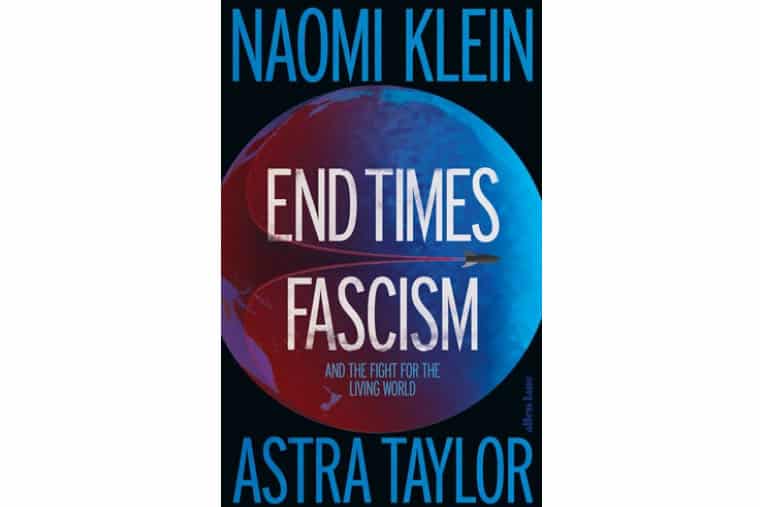
Judy Cox reviews End Times Fascism by Naomi Klein and Astra Taylor
New sculpture 'Lady in Blue' strides across the Fourth Plinth