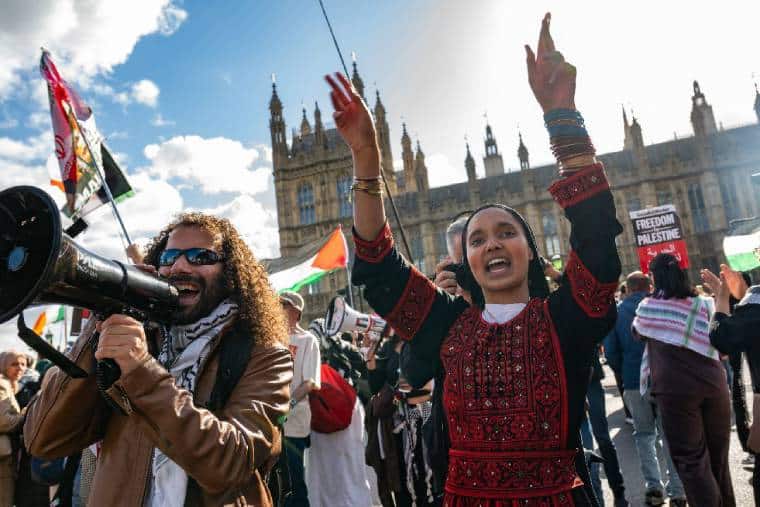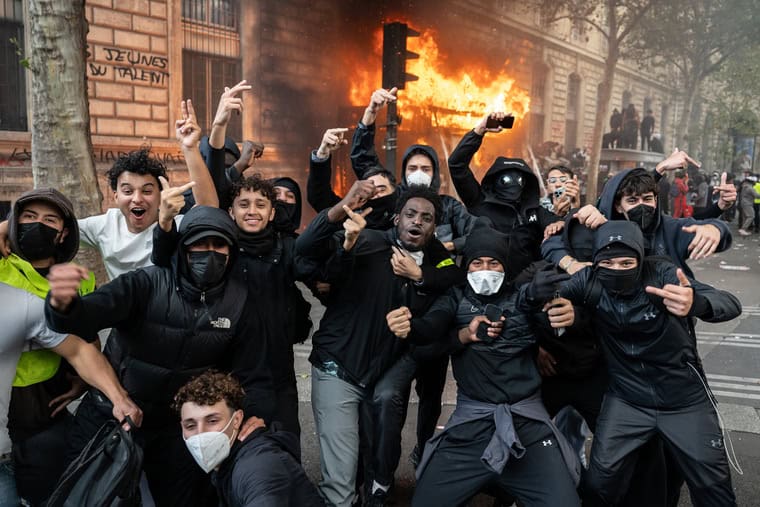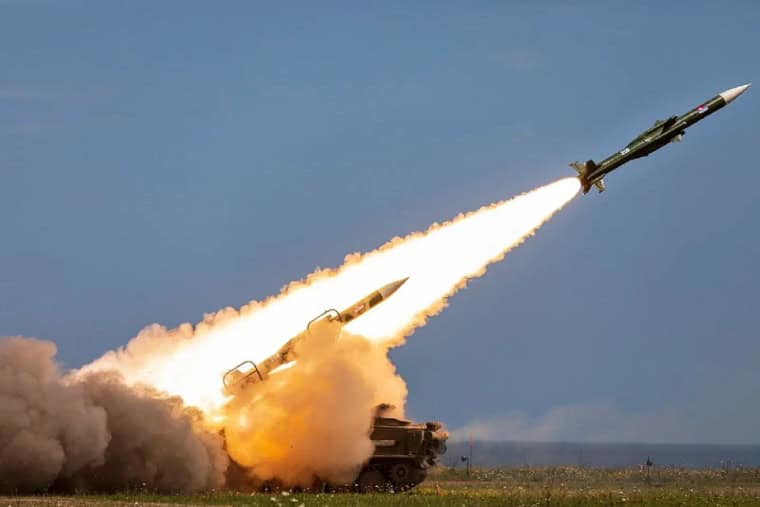
Imperialist competition is increasing at all levels of the global system (Credit: rawpixel.com / U.S. Department of Defense)
World leaders marched us closer to war this week.
But if you follow the mainstream media, it presents what’s taking place in Yemen, Ukraine, Iran and Palestine as isolated snapshots.
At best, we’re told that “authoritarian” forces are trying to undermine “us”—whether it’s the Houthis, Vladimir Putin or the Islamic Republic in Iran.
In reality, the snapshots are all part of a much deeper crisis of imperialism and the system.
First, imperialist competition is increasing at all levels of the global system. At the international level, we see the return of “great power competition”, which reflects the long-term decline of the US and the rise of China.
But we’ve also seen the rise of regional imperialist powers outside the historic core of capitalism. Israel, Saudi Arabia, the UAE, Iran and Turkey are all vying for regional dominance in the Middle East.
The flashpoint over Saudi Arabia and Yemen is a reminder of how US decline has opened up space for such powers.
Second, the liberal capitalist order built by US imperialism after 1945 is disintegrating. And neoliberalism, the dominant way of managing global capitalism for over 40 years, is breaking down.
Ruling classes are looking to forms of “state capitalism” to help them compete internationally.
This sees the state take on a much more active role in directing investment and organising production as it faces a world of intensified competition.
Third, these two shifts are intertwined with how the rise of China as a manufacturing powerhouse has reshaped global capitalism.
All these changes are increasing competition across the world.
What’s the way out? The Marxist theory of imperialism understands that the drive to war is rooted in the profit system.
But it does not simply see the world as a chess board where “great powers” play out their rivalries and the rest are passive victims.
Our understanding of imperialism reasserts the agency of the overwhelming majority of people.
If the drive to war is rooted in the profit system, what’s the social force that has the power to disrupt that system? Here, we point to the potential power of workers when they strike.
Today, social struggles are raging on the streets of France and the Spanish state, and the Palestine movement has fed into them.
In Britain, such struggles haven’t broken out—yet. But we can try to bring together the radicalism of “Generation Palestine”, social struggles and our generational battle against the far right.
And, in every battle, we have to find ways to infuse it with the social power of workers to disrupt the system. Such a force can stop the drive to war and defeat the horrors of imperialism.
The international day of action in solidarity with dock workers in the Mediterranean on 30 October is a good opportunity. They are taking action over Palestine and arms being sent to warzones.
A general strike is taking place in Italy on the day and it comes amid the revolt in France and the Spanish state.
What can you do in your union branch, workplace or campus?
Andy Burnham’s first budget day approaches on 28 October.
The consistent line from the government is that it can’t afford big spending commitments this autumn. But the drive to war continues. Spending on “defence” is set to rise £73.5 billion by 2028-29.
The money for war will be siphoned directly from the pot for healthcare, education and other public services.
While working class families are crying out across the country (see page 16), pension security is being undermined and energy bills are rising.
Workers are being squeezed more and more. Any pay rises they win come straight from another pot.

The national care service that Burnham has promised will be funded by scrapping the pension triple lock—meaning poorer elderly people will end up funding this care anyway.
It is not just older people who require social care, but there has been no mention of social care for adults or young people.
If the government has money for warmongering and slaughter abroad, it has money to save the public services that it has left to crumble. People should not be left freezing, hungry or waiting months for healthcare to fund more death and destruction.


We need more than an apology
Reform UK is dogged in scandal, but if its support declines, where do those voters go?
The widespread rioting after Saturday’s protests shouldn’t be dismissed as the actions of a small minority