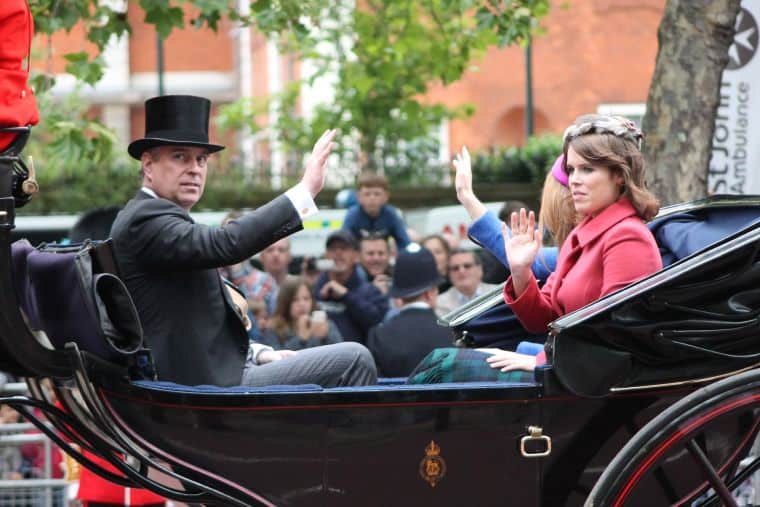
Why have institutions like churches covered up abuse for centuries? (Photo: WikipediaCommons)
The Cornell 7 case has once again propelled institutional sexual abuse into the spotlight.
Members of Chi Phi frat house at Cornell University sexually assaulted Jane Doe. The university tried to hush it up.
Why do respected institutions choose to protect their reputation at the expense of survivors of abuse?
Italian Marxist Antonio Gramsci distinguished between the institutions of the state and the institutions of what he called civil society.
Civil society is made up of voluntary organisations which exist between state institutions and the privatised family.
State institutions—the police, the courts, prisons, the armed forces—systematically use violence to reinforce hierarchies of control.
The ruling class exerts its ideological influence through civil society—the Church, the media, leisure and sport.
The intuitions of the state and of civil society reinforce each other.
They also reproduce hierarchies, those with influence can coerce and silence those with less power.
The Protestant and Catholic Churches have harboured abusers and exploited people to organise cover ups.
Decades before Jeffrey Epstein recruited politicians, CEOs and celebrities to his grooming gang, there was the Kincora Boys’ Home in Belfast.
“Housefathers” there sexually abused boys at the home for 20 years before it was exposed in 1980. British intelligence protected senior figures from the military and judiciary who were involved in the abuse.
Jimmy Saville used his status at the BBC to abuse hundreds of children. Saville was protected by BBC executives, government ministers and his friendship with the then prince Charles.
They ignored rumours about his paedophilia and necrophilia to bask in his celebrity. He was only exposed after his death in 2011.
An inquiry into the scandals of Kincora and Saville found that political and religious institutions “regularly put their own reputations or political interests before child protection”.
Institutions such as the BBC are formally independent of the state. But they reflect and reinforce social inequalities. The rich create and sustain institutions and networks that protect each other.
Their schools and clubs are based on excluding, bullying and abusing others. This trains them to be brutal and ruthless “leaders”.
But the institutions of civil society reflect something deeper than the interests of the ruling class.
Capitalism alienates us all from what makes us human—our capacity to work collectively to produce what we need.
We attribute human powers to inanimate objects. The things we create come to dominate us.
Karl Marx observed that under capitalism, “It seems as if the thing itself possesses the ability, the virtue, to establish production relations”, rather than the workers who produce the thing.
What happens in relation to commodities generalises across society. It appears that some mysterious force called “the market” causes prices to rise and fall.
The extension of the state and the development of huge corporations have created sprawling bureaucracies. These bureaucracies take on an existence independent of their original function. They become an end in themselves.
Hungarian Marxist George Lukacs described how these institutions generate a “bureaucratic ‘conscientiousness’”. The worker in the bureaucracy develops a “sense of responsibility” towards the institution that employs them.
The bureaucracy itself becomes the important thing, not the service it was set up to provide for people.
This creates what Lukacs called a “ghostly objectivity” in which institutions appear to represent an objective force for stability and order.
Making the institution work, and protecting its reputation, becomes the primary objective for those enslaved to an institution.
But human action creates institutions and human action can tear them down. And we have the collective power to challenge the sick system which dehumanises us all.


Without struggle, hope can dissipate
Has the Soviet Union discredited the idea?