Labour party advert from 1938 (Photo: Wikimeida commons)
For most people, most of the time, politics is about what happens in parliament. The only way to change things is to elect whichever party makes the most appealing and convincing promises.
In Britain, the Labour Party has been the main beneficiary of working class votes.
When in office, the party functions as a “safety valve” for working class discontent, but also tries to manage capitalism and make it more productive.
That is why Labour’s rhetoric has always invoked both class and nation. But in practice Labour always puts the “national interest” first—allowing the bosses to set the agenda.
If reformist parties are in office when the economy goes into recession, they will impose austerity and slash living standards. That can lead to splits and anger, but the pattern of betrayal continues.
How can revolutionaries explain the enduring nature of reformism?
Vladimir Lenin argued that reformism rested on a narrow layer of workers, in capitalism’s heartlands, who benefitted from the profits of imperialism. He called them the “aristocracy of labour.”
But the great wave of international workers’ revolutions which ignited from 1917 to 1924 was based on well-paid, skilled engineers in cities such as Petrograd, Glasgow, Berlin and Turin. And later it became clear that reformism is not confined to the main imperial centres.
Revolutions in countries, including Indonesia, Iran and Egypt were derailed by various models of reformism. This showed that reformism is not simply the product of a privileged layer of workers.
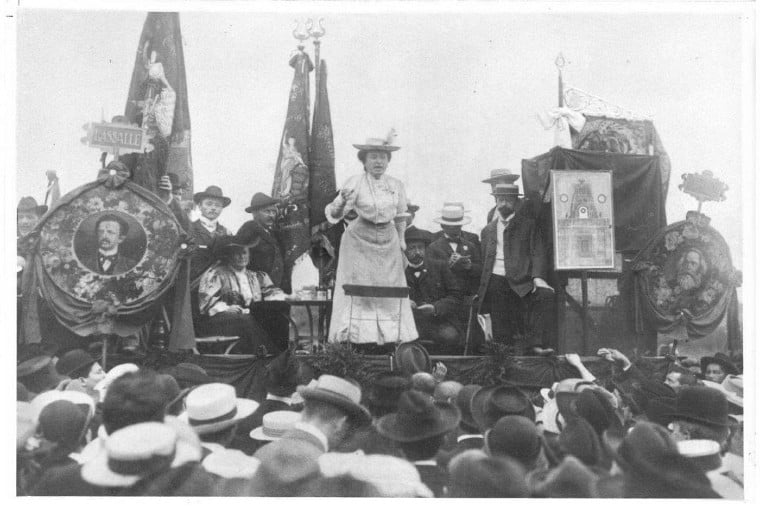
Rosa Luxemburg outlined an alternative approach. She operated as a revolutionary within a mass reformist party, the German Social Democratic Party (SPD). There she fought with great determination against a growing layer of bureaucrats who saw workers’ action as subordinate to building the party’s electoral strength.
Luxemburg said the bureaucracy rested on a false division between politics and economics. Economics was seen as the domain of the union leaders, while politics belonged to MPs.
The capacity of workers to overcome such division during mass strikes was central to her vision of change.
Luxemburg was right to resist the conservative influence of reformist leaders. But reformism cannot be defeated by argument alone.
That is because reformism rests on workers’ actual experience of the world, not simply ideas about it.
Many working class people have grievances against the system. But, after a lifetime of being put down, few have the confidence to challenge the influence of established leaders.
Even in revolutionary situations, this lack of confidence leaves people vulnerable to the duplicitous arguments of their official leaders. Overcoming this deeply rooted lack of confidence requires both experience and revolutionary politics.
During the German Revolution of 1918-19, SPD leaders talked left to win the support of radicalising workers and to isolate the real revolutionaries.
They spoke of “revolution”. But those same leaders organised paramilitary troops to murder revolutionary leaders, including Luxemburg.
The SPD was a well‑established organisation and, because it appealed to “common sense,” it rose rapidly in a period of turmoil.
There were no legal trade unions or labour type parties in Tsarist Russia. But after the revolution of February 1917, workers first elected reformists to lead their councils.
It took six months of political argument and experience for the workers’ councils to elect a majority of revolutionaries. The lesson was that reformism will not die simply because its failures are exposed.
It constantly regenerates because it reflects both an enduring desire for change that pushes workers forward combined with the lack of confidence that holds them back.


Without struggle, hope can dissipate
Has the Soviet Union discredited the idea?
The right claims that cultural Marxism is a project to subvert Western society