The police is corrupt, sexist and racist (Picture: Clara)
The police are trying to rehabilitate their record on sexism after a series of scandals. The move comes at a time when violence against women and girls is sky-rocketing.
The National Police Chiefs’ Council on Tuesday claimed it is “transforming” how the police “investigates rape and serious sexual offences”. This includes focusing on the “actions of the alleged perpetrator, not the victim”.
But on the same day, the assistant commissioner of the Met Police Louisa Rolfe said abusers are “attracted to professions like policing”.
She added that there’s been a 27 percent increase in workers dismissed from the force—but rooting out the bad apples within a rotten system isn’t enough.
Police institutions reflect the sexism rooted in society—and protect those at the top who benefit from it and abusers in their own ranks.
Violence against women and girls has been soaring, increasing by almost 40 percent over the last five years. It’s gone from an around 790,000 crimes in 2018-19 to 1.08 million in 2022-23.
Child sex abuse and exploitation also increased by more than 400 percent between 2013 and 2022. And one in every six murders related to domestic abuse in 2022-23 and victim suicides following domestic violence have risen year-on-year.
The numbers are also likely to be much higher. Sophie Francis-Cansfield from the domestic abuse charity Women’s Aid said, “It is important to remember that many survivors will not report their experiences to the police, therefore we know the issue will be much larger than the data shows.”
Abigail Ampofo, interim chief executive of domestic abuse charity Refuge, said the National Police Chief’s Council statement contains a “glaring omission” around how police are addressing “cultural change and dealing with institutional misogyny”.
She added, “Without a continued, relentless focus on rooting out police perpetrators of violence against women and girls, we fear that perpetrators will remain within police ranks.”
Rolfe’s response came after being asked on ITV’s Good Morning Britain show about murdering and rapist police officers like David Carrick and Wayne Gouzens.
Both Couzens and Carrick, who were in the same Met branch, got away with predatory behaviour against women—and could’ve been stopped. Couzens went on to rape and murder Sarah Everard in 2021, which led to a surge of rage on the streets against the police.
The 2024 Angolini Inquiry into her murder said that “without a significant overhaul there is nothing to stop another Couzens operating in plain sight”. And Couzens’ working environments “did nothing to discourage his misogynistic view of women”.
Sexism and all its violent forms are a product of a system that is reliant on and dripping in oppression. The police, the courts and the state represent uphold that.


Thousands of young women say, 'We are not marching for safety, we are here to protest for our freedom'
Case highlights how predators get away with violence
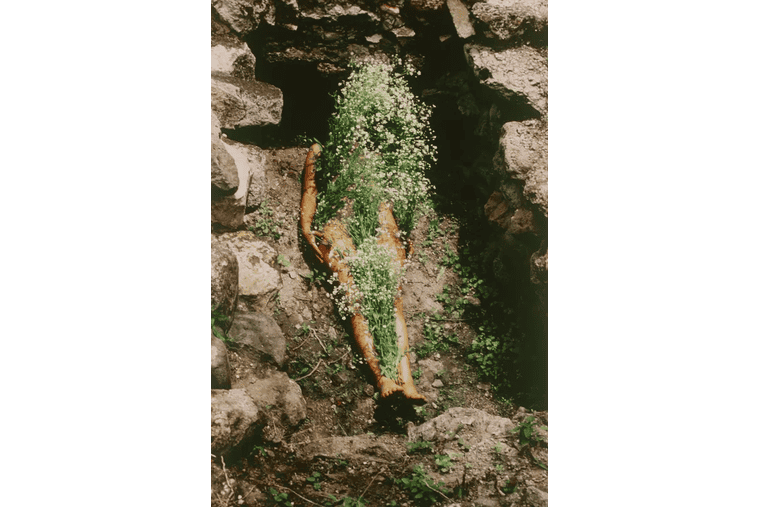
Ana Mendieta is an artist whose work is unquestionably rooted in the body and in the self