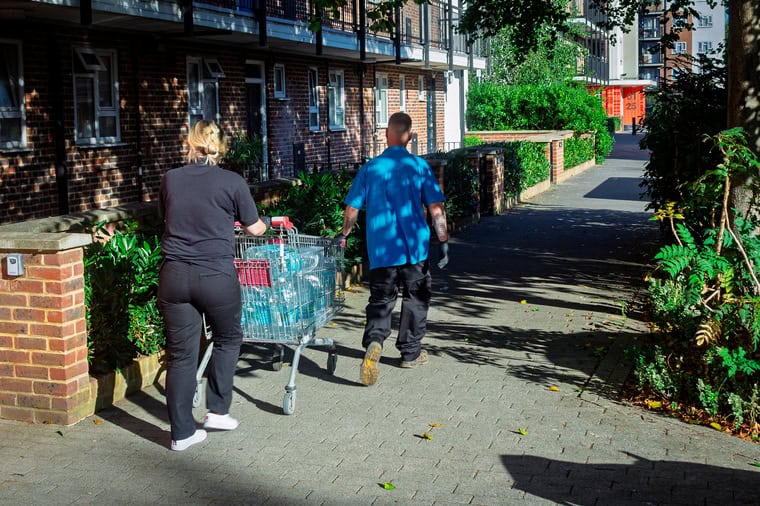
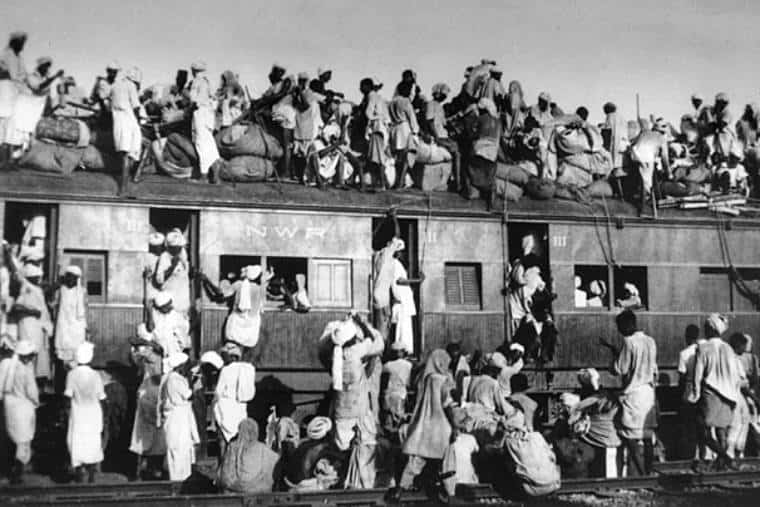
Those in power call those who stand with Palestine extremists Picture: Guy Smallman
Be proud when the Tories say you are a left wing extremist. Stand tall when they denounce you as an Islamic extremist.
It’s a badge of honour for combating imperialism. Socialist Worker apologises that we have not yet entered the frame alongside groups such as Cage, the Muslim Association of Britain and Muslim Engagement & Development.
But we know the government is thinking of people like us too. Communities secretary Michael Gove last week faced the problem that he could not be honest and say that for capitalist governments extremists are those who are judged to be a threat to big business and imperialist control.
This is how to understand the real basis of the government’s definition of extremism.
It opposes “the promotion or advancement of an ideology based on violence, hatred or intolerance” that aims to “negate or destroy the fundamental rights and freedoms of others” or “undermine, overturn or replace the UK’s system of liberal parliamentary democracy and democratic rights”.
In the specific Gove wants to make life difficult for those who demonstrate for Palestine, but there is also a wider project going on. Extremist is often used as an insult, a vague label for someone who campaigns against government policy.
That’s the narrow sense in which the Tories use it at present, an attempted slur to restrict protest rights and squeeze the highly limited democratic freedoms that presently exist.
You’re extreme if you stand outside the set of politics endorsed by Rishi Sunak and Keir Starmer. A trade union leader who brokers compromises is acceptable.
A trade unionist who heads up militant class war battles is an extremist. Those who sanction genocide by Israel are moderates.
Those who seek to stem the genocide are extremists. Sometimes the state will also say that fascists are extreme. This helps to give a false impression of even-handed balance and also reins in those who, for example, criticise the Tories from the far right.
But the limits on the fascists are never consistent or wholehearted—unlike the moves against anti-imperialists and anti-capitalists.
In a more profound sense, the key elements of what’s deemed non-extreme are the defence of parliamentary democracy, ownership and control of property and the imperialist British state. Whatever the particular party in power is, they have to be the bedrock of class rule.
Of course how much parties rub against this rule can fluctuate, especially when class struggle from below demands it of them.
For example, the Scottish National Party agitates for the break-up of the British state and for the overthrow of a particular arrangement within the “UK’s system of liberal democracy”.
But crucially, it does so within a framework endorsed by the British parliament. It has agreed to wait until it is given permission by Westminster to arrange a vote on independence.
It would have undoubtedly upset the ruling class if the 2014 Scottish independence referendum had come out for separation.
But it would be “extreme” if such a project was linked to leaving Nato, removing Trident missiles without negotiation and seizing the wealth of the multinationals.
And the “worst” sort of extremism would be if independence were secured by mass civil disobedience, strikes or simply by the Scottish parliament declaring it and defying the British state. The Labour Party is not extreme, say our rulers.
It may lurch about a bit, but it accepts the basics of capitalist control and may play the useful role of a substitute government when times are tough.
However, individuals may encourage un-capitalist actions by others and should be placed in the “extreme” category. Jeremy Corbyn generally put forward a gently reformist set of policies, but he was not a reliable friend of United States imperialism or Israel. So he was an extremist.
Class societies before capitalism did not use and would not have recognised the word extremism. Those who went against the monarch or the church were traitors and heretics, deserving of exile or death.
They placed themselves outside the limits of what was acceptable in political and religious terms by opposing a divinely ordained leader. But capitalism had a different set of foundational myths.
In their frequently revolutionary and violent battles against the previous feudal ruling class, capitalists waved the banner of liberty.
By this they meant the removal of obstacles to the market and non-interference by the organised working class. Capitalists said they were for equality—in truth they meant that everyone has the same money-based rights to live under a bridge or in a mansion.
And the capitalists proclaimed fraternity, by which they meant the absence of class war—by the exploited and oppressed.
But these slogans also had an echo within the fight for liberation by workers and the poor. So capitalists and proto- capitalists from the English revolution of the 1640s onwards have always had to draw lines between their honeyed phrases about equality and the reality of class rule.
As Frederick Engels put it, although the capitalists said they stood for wider society in their struggle against the old order, “In every great bourgeois movement there were independent outbursts of that class which was the more or less developed forerunner of the modern proletariat.”
Such movements of “extremists” had to be blunted or smashed. A crucial split with the “extremists” came in the revolutions of 1848. France saw two revolutions.
The February one removed the king, the second in June raised working class social demands. The capitalists were content with the first but the second they drowned in blood.
Karl Marx wrote “The February revolution was the nice revolution, because the contradictions which erupted in it against the monarchy were still undeveloped, because the social struggle which formed their background had only achieved an existence in words.
“The June revolution is the ugly revolution, the nasty revolution because the phrases have given place to the real thing.” Marx went on, “None of the numerous revolutions of the French bourgeoisie since 1789 assailed the existing order, for they retained the class rule, the slavery of the workers, the bourgeois system, even though the political form of this rule and this slavery changed frequently.
“The June uprising did assail this system. Woe to the June uprising!” The battle for democracy saw a consistent hypocrisy from the new capitalist ruling class.
While claiming to stand for such freedoms, capitalists feared the power of workers and movements such as the Chartists in Britain that brought together democratic and economic issues.
Winning the vote for all— and particularly the vote for women—was generally possible only by using the “extreme” methods of the class struggle.
If you take part in “extreme methods” and threaten the boundaries of capitalist class rule, you are an extremist to be crushed by the state.
So the greatest purge on extremism came after the Russian Revolution. For Western rulers, an imitation of the 1917 insurrection was the mortal fear.
Communists had to be denounced as evil, the highest form of extremism and fanaticism. Later, during the Cold War in the 1940s and 50s, US senator Joseph McCarthy carried out his crusades against Communism.
He rooted out those who had made themselves “foreign and alien” with their views using the House Unamerican Activities Committee.
This name at least had the merit of clarity unlike Gove’s absurd Counter-Extremism Centre of Excellence. The “Red Scare” battles wrecked lives to advance US imperialism and defend its domination of the globe.
A similar assault came with the war on terror, identifying Muslims and anti-war activists as extreme because they refused to sign up for imperialism.
In every case, moderating or restricting our views and actions just gives confidence to the other side. That doesn’t mean offering ourselves up for arrest, bans and punishment.
It does mean rebuffing the government’s attacks, supporting one another and standing against the attacks on our movement.
After being accused of extremism, US civil rights leader Martin Luther King Jr wrote, “Though I was initially disappointed at being categorised as an extremist, as I continued to think about the matter I gradually gained a measure of satisfaction from the label.
“Will we be extremists for the preservation of injustice or for the extension of justice?” When we attack their system they call us extremists. When they do this we should know we have shaken them.


Thousands of residents in London have been without water for months
The climate crisis is impossible to ignore
The human cost of the heatwaves are higher than the temperature
Divide and rule was used to undermine struggle