Spencer and Lacey are facing the sharp end of the schools funding crisis
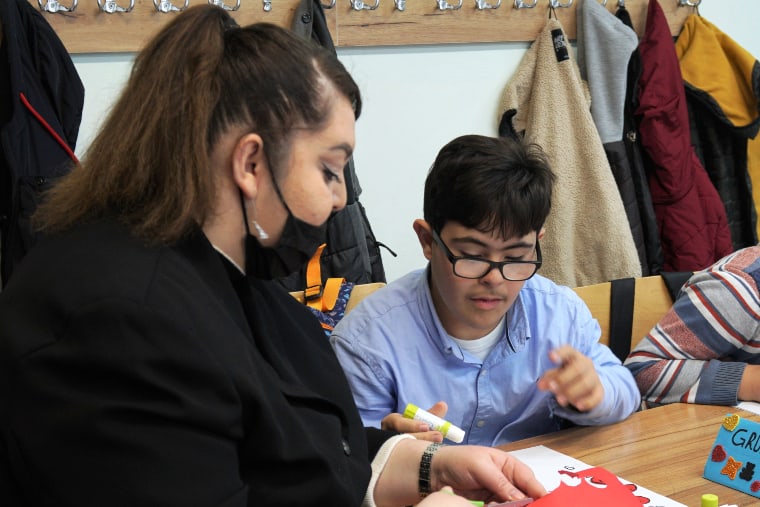
Spencer is an 11 year-old living in Derbyshire who has a rare genetic condition. It affects every bone and organ in his body, meaning he has special education needs.
He’s just finished primary school. The special education needs and disabilities (Send) coordinator at his school, his mum Lacey, his nurse and physiotherapist met and concluded that a change of provision was needed.
Spencer needed to go to a specialist school that can adequately meet the variety of medical needs he has.
But Lacey, who is a trainee nurse, was informed by Derbyshire council that there are no Send school places available in the county. It means that Spencer is likely to spend a year out of education.
Derbyshire council then told Lacey that she would receive funding for 15 hours a week of English, maths and science lessons for him. The council said it would provide a tutor for these lessons.
Only last Friday, after months of waiting, has the council provided a tutor, and for ten hours rather than 15.
“The system isn’t just broken, it’s shattered to a thousand pieces,” Lacey told Socialist Worker. “Spencer has a specialist doctor and a specialist team—he needs a specialist school.”
This isn’t just a one off, but part of a wider crisis in education for children with Send.
Over a decade of the Tory government failing to provide sufficient funding to councils and schools has left the Send provision in tatters.
Spencer’s story shows how councils care more about their bottom line than ensuring children receive the education they need.
A glimpse at the whole Send education system paints a devastating picture–there are soaring demands, rising costs and poor outcomes.
More parents are becoming aware of the support their children are entitled to. So there has also been an increase in the number of children with education, health and care plans (EHCP).
If a needs assessment finds a child has special educational needs, the council is required by law to offer an EHCP to the child.
This could provide funding for a child to go to a specialist school or measures such as one-to-one support in a mainstream school. The number of children with EHCPs currently sits at 576,000.
Over the past decade, Send funding rose by 58 percent to £10.7 billion for 2024-2025. But funding per plan fell by 35 percent over the same period. The result is that children with Send aren’t receiving the education that meets their additional needs.
Meanwhile, local authorities face school funding deficits of up to £4.6 billion by March 2026. That’s when a statutory measure that allows councils to keep Send funding off their balance sheets ends.
When this happens, four in ten councils are set to face bankruptcy, according to a recent report by the National Auditing Office.
Cash-strapped councils are responding with cuts. They are doing the best they can to delay giving out EHCPs, then not fulfilling the plans once issued. And, as part of the cuts, councils are also not expanding school capacity—currently two in three specialist schools are oversubscribed.

Often parents have to take a council to a tribunal just to ensure their child’s educational needs are met. In 2023, there were a record number of complaints regarding Send provisions upheld—95 percent of tribunal complaints.
Lacey said that “last year the council paid out half a million in compensation for not finding school places for children”. And she argued that the council “won’t put its decision in writing because it knows it will be taken to a tribunal”.
But the earliest Lacey can see a tribunal is in six months—and would also need a £1,500 down payment to a solicitor. “How can you hold them accountable if you haven’t got the money?” she said.
“I’m a student nurse and I’ve had to put my training on hold so I can look after Spencer,” she said.
“I want to work in the NHS and give something back by helping other people in similar situations. But I can’t even do that when my son hasn’t got a full time school place.”
Lacey argued, “We play by the book but the system is rigged for people like us. I’m so angry. How many more children will be put through this?
“Disabled children are the most vulnerable children in society. What does that say about our country when we can’t protect the most vulnerable?
“He has seen all of his year six class all go up to the secondary school that their parents choose. He is the only one that hasn’t—the only difference is that he’s a Send child.
“Parents are crying out for help but no one is helping us.”
Lacey added, “We need change and we need it fast. How many more vulnerable children will be put through the wringer before it is too many?”


A staffing crisis in the NHS
Health workers set to strike across four Manchester hospitals
Bus workers rejected an offer and came back out