Demonstration against Section 28 in Newcastle, 1988 (Steve McTaggart)
I was terrified in 1987-88. I’d just committed myself to a course and Section 28 was erasing my existence. I thought, “This is my job and I can’t be who I really am—I have to keep quiet about my own life.”
In school you didn’t know where you stood, you didn’t know what you could say. There was very little in terms of LGBT+ inclusive education.
Section 28 was about putting the lid on what local authorities had done. A number of strong left local authorities were picking up LGBT+ education and running with it—that’s why the Tories wanted to smash it.
This was the high point of the HIV/Aids crisis and there was a massive level of panic.
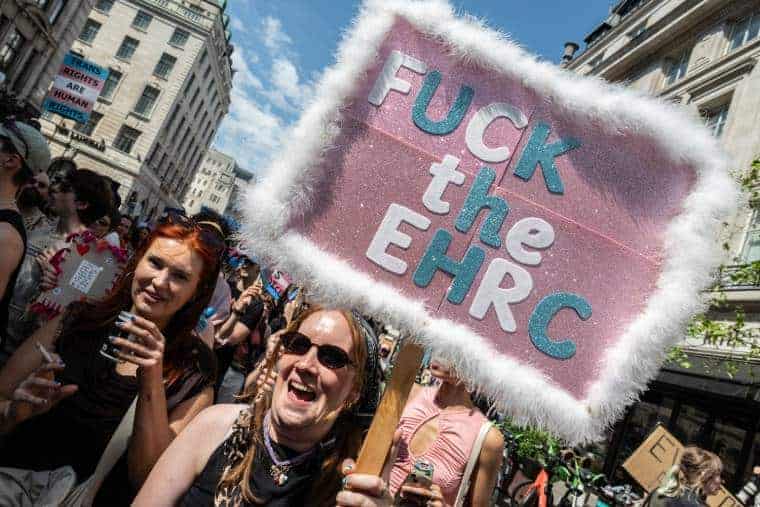
The bigots today are trying to recreate the same level of panic. They’re trying to marginalise a group, create so many nasty ideas about them and play to the fear that people have about their own lives and identities.
The dirty things they used to say about gay men they’re now saying about trans+ people—it’s much the same.
Section 28 put people back in the closet—they couldn’t possibly come out. The last thing they wanted to do was attract attention.
The students were brilliant, they knew I was gay. But they were lovely to me. One boy said, “If you came out it would make it so much better for boys like me.”
They demanded that I stood up for them. There’s all these tensions underneath what’s going on.
There’s an irony in all this repression and self-repression that they try to put on you—the reality is that people aren’t necessarily going to be bad about it.
We marched against Section 28—the idea of going on to the streets politically and standing together against the state was really powerful. It was very liberating to have that happen.
To see the response that came from LGBT+ and non-LGBT+ people really mattered, and gave me a sense of strength.
I’m a revolutionary socialist, that made me want to fight—and doing it in public was important. When people are treating you like you’re dirt, it’s brilliant to come together and fight back.


Fight every attempt to exclude, isolate and attack trans+ people
The far right are stoking up fear and hatred of Muslims
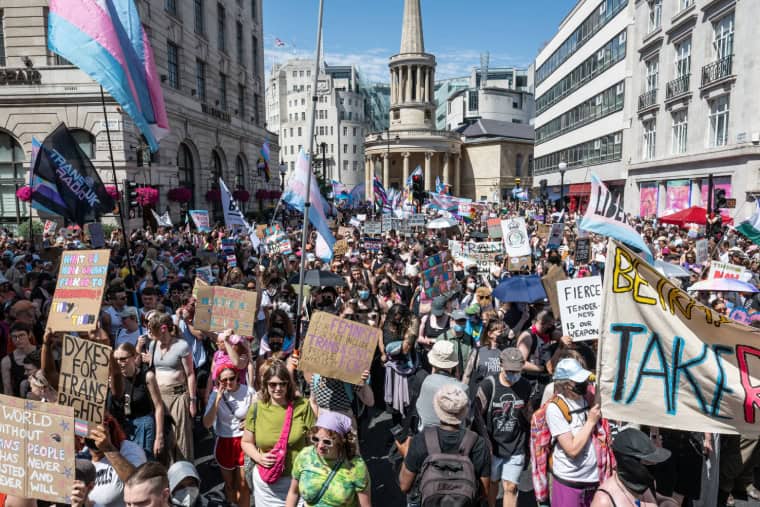
Defiant march says ‘trans joy is here to stay’