An interlacing of brutal state violence and racism with the absurd and ridiculous
One Battle After Another opens with migrants being held by Ice-style militarised police in a detention centre near the border of the United States and Mexico.
A US radical group, the French 75, uses force to liberate the detainees.
This sets the tone of director Paul Anderson’s film—a cry of rage against rising authoritarian state violence saturated with virulent racism. This is combined with sympathy, perhaps even celebration, for those who fight back.
Anderson mixes dark humour, a frantic pace and sometimes cartoonish depictions of characters with chillingly believable episodes of state violence.
The result is a far from perfect film, but one that is hugely enjoyable and certain to provoke debate.
For a mass market film, with wide distribution, promotion and some big name actors—such as Leonardo DiCaprio and Sean Penn—to tackle these themes is a significant development.
The raid at the start of the film takes place 16 years in the past—it’s a reminder that the brutal treatment of migrants didn’t start with Donald Trump.
But the French 75 evokes a different era than the late 2000s. The film nods more to those revolutionaries in the West who turned to various forms of armed struggle in the 1970s.
A multi-racial group with a number of black female leaders, it is like a cross between the Black Panthers and the Weather Underground.
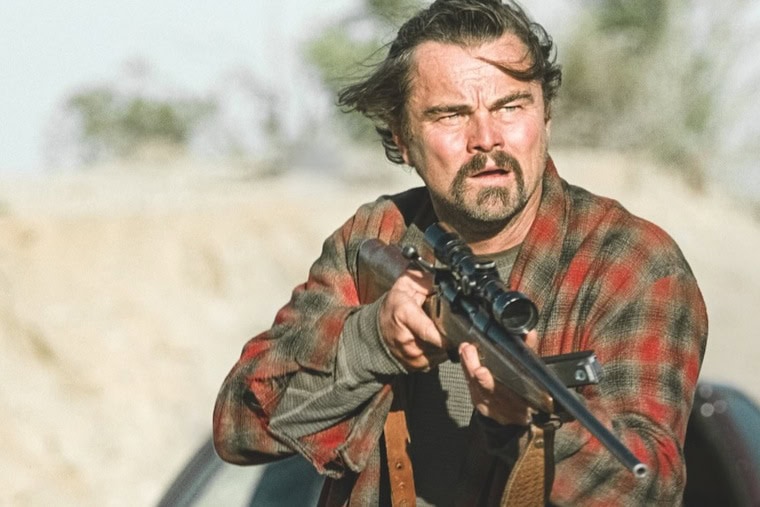
The narrative centres on a former French 75 member, Bob Ferguson—DiCaprio—and his child, Willa, now 16, played by Chase Infiniti.
Willa’s mother, Perfidia Beverly Hills—played by Teyana Taylor—is also a former French 75 member. Perfidia, however, lived up to her name—meaning “treachery” in Spanish—and betrayed her comrades to escape prison.
Bob, dishevelled, drug dependent and paranoid, has withdrawn from the struggle to focus on bringing up and protecting Willa. But he still identifies with the old cause.
The commander of the detention centre, Colonel Steven J Lockjaw—Penn—as vicious as he is ridiculous, is searching for Willa.
Lockjaw acts out his sexual fantasies about black women on Perfidia who he trapped, and suspects that Willa is his daughter.
Anderson’s depiction of Perfidia as a highly sexualised woman, who also abandons her own baby, is one of the weaker aspects of the film and reinforces racial stereotypes of black women.
Lockjaw is determined to join an elite white supremacist group made up of rich white men calling themselves the “Christmas Adventurers Club”. The possibility that he is the father of a child with a black mother is the obstacle to Lockjaw’s recruitment to the group.
Lockjaw tracks Ferguson and Willa down to Baktan Cross, a small “sanctuary” town that protects undocumented migrants.
As one of Bob’s friends and allies comments, he has a “Latina Harriet Tubman” situation going on. Tubman, a former enslaved black woman, was a key figure helping slaves to their freedom during pre‑Civil war America through a secret routes and safe houses.
This passing reference to real events is paired with the briefest shot of Bob watching Battle of Algiers—Gilberto Pontecorvo’s epic film about the anti‑colonial resistance to French imperialism in Algeria.
This seems to demand we take One Battle After Another seriously, at some level, despite its absurdities.
The images of resistance, including urban uprisings after Ice‑type raids—are those of mass rebellion, not the heroic actions of an armed few.
Willa, a wholly serious figure and perhaps the moral centre of the film, emerges as a revolutionary figure for a new generation.
The interlacing of brutal state violence and racism with the absurd and ridiculous may not be to everyone’s taste—but who can say this isn’t part of our contemporary reality?
Kerry James Marshall is perhaps the United States’s greatest living painter, and his The Histories at the Royal Academy is his largest exhibition outside the US to date.
The Histories reclaims the history painting genre–most well known in paintings like “Liberty Leading the People” by Theodore Gericault or “The Night Watch” by Rembrandt van Rijn. The genre was used for centuries to proclaim the supremacy of European and Western civilisation and the riches they had stolen from their colonies on a monumental scale.
Marshall totally reinvigorates the genre. He said he did this in order to “establish a phenomenal presence that is unequivocally black”. “I started out using history painting as a model because I wanted to claim the right to operate on this level.”
The exhibition takes you through Marshall’s career and his evolving relationship with black history and culture in eleven rooms.
Beginning with the idea of the academy, Marshall questions the dynamic between the model, the painter and the viewer throughout history. It is an unflinching look at the way the black body has been objectified and sold throughout history.
The running theme is the presence of black people throughout history. The paintings in the second room, titled “The Invisible Man”, plays off the book of the same title by Ralph Ellison. Sharing the themes of this book, the paintings explore the contradictions of presence and absence that come with being black in the US and in art history.
Perhaps the most impactful paintings in the exhibition are those that most firmly assert the fact that black people have always been a part of history. Some of these are portraits of people that are recorded only by name, such as “Scorpio Moorhead, Portrait of Himself, 1776”.
Others take well known histories and reorientates them to show the complexities of history. The most impressive of these is “Portrait of Nat Turner with the Head of his Master”. This painting shows Turner, who led a rebellion of enslaved and freed black people across Southampton County, Virginia.
The painting shows Turner standing front and centre, a bloodied axe in his hand covered in blood. Behind him the decapitated head of a white man lies on a white bed, slightly bloodstained but largely neatly made with lace pillowcases intact. Behind them both, a door hangs askew with hack-marks in it–very reminiscent of the infamous “Here’s Johnny” scene from The Shining.
It’s an unabashed display of agency and power against the brutal system of enslavement.
It should be said that the label on this painting proclaims the slave rebellion led by Turner as the “deadliest in US history” killing over 50 white men. But it makes no mention of the 120 black people killed in its aftermath, many of whom had not been involved.
Another shows Olaudah Equiano, the now famous writer and abolitionist, when he was first kidnapped from his Igbo village and enslaved.
One incredible painting–“Black Painting”—is entirely in greyscale, showing the darkness of a bedroom. It takes your eyes a minute to adjust before you can make out the bed, the fluttering curtain and the books on the bedside table. It’s suggested that it could be Fred Hampton’s bedroom, in the minutes before he was shot dead by the police.
But Marshall says “My view of how history works is that it’s always part fact, part fiction, part fantasy”. And this is shown in one discrepancy, the Angela Davis book on the table was published two years after Hampton’s murder.
Later rooms explore black culture and US history within Marshall’s lifetime. Some of these explore religion and mourning in the popular consciousness. This is very interestingly done by exploring and contrasting the public mourning of John F Kennedy and his brother Robert, Martin Luther King and other leaders of the civil rights movements and the Black Panthers.
The final room, containing only three paintings, explores the Black Power movement and Panafricanism. Using the iconic green, red and black of Black Nationalism and the nude, Marshall contrasts the oversexualisation and objectification of the black body with political power and presence.
The exhibition takes you on a trip through imperialism, the Middle Passage, pop culture and the Black Power movement. And includes some beautiful snapshots of everyday life–such as his series on public housing projects and of barbershops.
Marshall is a once in a generation painter and the exhibition shows over forty years of his career, including works made just this year, is outstanding.
Frankie Murden


Interviews with RAR organisers 50 years on
Hadestown is a damning condemnation of capitalism
Exhibition seems to revel in making histories and events obscure
Artist Mike warns, 'This is what you’ll lose'