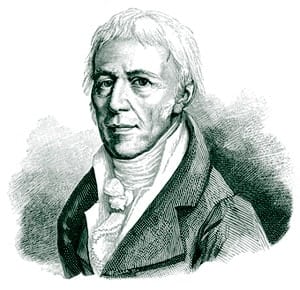
The story of the discovery of the structure of the Double Helix is well-known, but have often erased Rosalind Franklin (Photo: WikipediaCommons)
James Watson, who played a key role in the discovery of the structure of the DNA molecule, died at the age of 97 last month.
While celebrated for this brilliant discovery, he died disgraced. He will be remembered as a sexist, a racist and a cheat.
The story of the discovery of the double helix is well‑known, but shrouded in misconceptions.
Cambridge-based biochemists, Watson and Francis Crick, took the glory of the discovery for themselves, when their work drew heavily on that of other scientists.
How Crick and Watson arrived at the way atoms fit together in DNA is at the heart of the story. They found the ingredients, but had no idea how they were formed in the molecule.
My aunt, Rosalind Franklin, was working on DNA at Kings’ College London with her doctoral student, Raymond Gosling. In the next lab, another scientist, Maurice Wilkins, was also working on DNA.
Wilkins was really quite perturbed that Rosalind was not working under his leadership. Meanwhile, Rosalind thought she had been employed specifically to lead a team.
Her situation was not helped by the university’s sexist practices, which did not allow women staff into the common room, where such confusions could be addressed.
Rosalind had exceptional skills for molecular experimentation because she used a crystallography technique in X-raying molecules.
It is not clear who took the now famous Photo 51, which shows the pattern of DNA molecules. In the competitive world of science, it matters whose picture it was.
And if you are a woman scientist you are still less likely to get the recognition for discoveries than men.
It is also not totally clear how Crick and Watson got hold of the photo that would inform their work.
They had heard about Wilkins’ work and visited him, where they were shown a copy of the picture. I heard Wilkins say in a lecture that “we all make mistakes” in response to being asked who showed the photo to them.
When they saw the picture, Crick and Watson realised they were on the wrong path regarding the structure of DNA. But they did not acknowledge Rosalind’s contribution.
There was a race to discover how DNA is formed. Within a matter of weeks after seeing what is considered to be Rosalind’s photo, Crick and Watson had worked out the double helical structure.
Meanwhile, Rosalind was cross-referencing with a time‑consuming mathematical calculation. She arrived at the same conclusion as them a little later.
Watson wrote the story in his book The Double Helix. His description of Rosalind was patronising, calling her “Rosy” and focussing on her “blue-stocking” appearance.
Rosalind had died by the time the book was published. So my grandmother, appalled at the lack of acknowledgement of her daughter’s contribution, complained to the publishers and an amended second edition appeared.
Rosalind did not stay long at Kings and went on to work on the molecular formation of viruses at Birkbeck University. Her scientific contribution is said to be immense, not just because of Photo 51, but because of the technique behind the discovery of the double helix.
This method formed the basis of the work to develop the Covid vaccine.
Her commitment to socialism is omitted in the now endless accounts of her and her work.
Watson went on to contribute to the world of science, leading the Human Genome Project, mapping and sequencing the whole of the human genome.
But he claimed that black people are less intelligent than white people and that racism could be genetically justified. He continued to describe Rosalind—a brilliant scientist with a strong sense of humour—as a “difficult” woman.
Accolades and honorary titles that had been awarded to him have been removed.


Racism first developed as a justification for enslavement
Revolutions can liberate not only humankind, but nature as well
Investors fear that it's unsustainable