Anti-racismThe radical spirit of Hubert Harrison
A prominent militant in black and left movements, Harrison's critique of the left for its failure to take up racism left him partially forgotten
By Ken Olende
Downloading PDF. Please wait...
Monday 23 March 2026
Issue 2998
New book makes arguments from a century ago fiercely contemporary
Black militant Hubert Harrison demanded in 1917 that African Americans “supply themselves with rifles and fight if necessary to defend their lives and property”.
They faced an increasing wave of lynchings and racism, while many black leaders told them to keep quiet so as not to undermine the effort to win the First World War.
Harrison has been called the “father of Harlem radicalism”. His activism was combined with a lucid writing style and an ability to explain how the vile racism in the United States was not down to human nature. He explained that “as late as 1611 our
modern idea of race had not yet arisen, or had not found expression in the English language”.
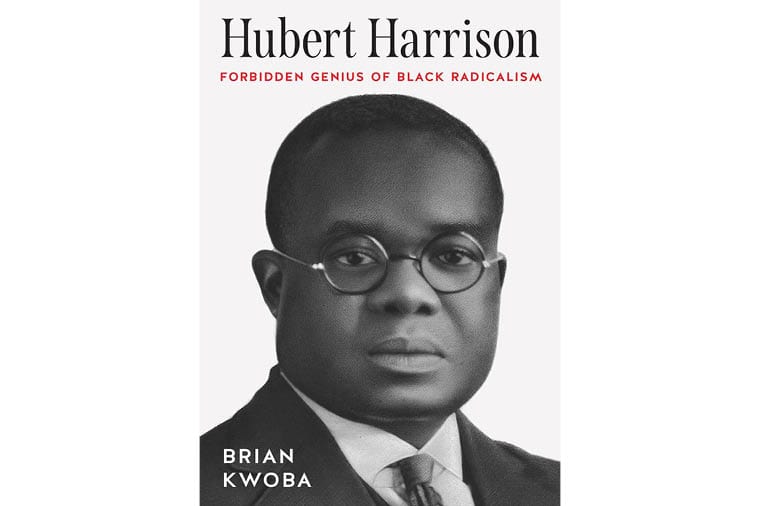
Brian Kwoba’s richly detailed new political biography revives the spirit of this shamefully forgotten activist.
Born poor in the West Indies, Harrison emigrated to the US aged 17 in 1900, where he lived in New York and worked for the Post Office. He made a name for himself as an orator in Harlem’s rich street corner culture, keeping crowds of hundreds spellbound on subjects including African history, women’s rights, evolution and contraception.
Harrison was an outstanding individual. But his real genius lay in attempting to show black people and other workers that they could collectively change their world.
He read constantly and wrote articles on Marxist theory. He became a full-time organiser to build among black people for the Socialist Party of America, at the time a significant organisation with about 100,000 members.
But the party did not see a focus on fighting racism as central, and its branches in the South were segregated. Harrison wrote a scathing article asking, “Southernism or socialism?” He wrote, “Can we hope to triumph over capitalism with one half of the working class against us?”
The party refused to change and he left, working with the revolutionary Industrial Workers of the World (IWW) which encouraged mass strikes to take on capitalism.
But this syndicalist organisation still believed that class struggle itself would defeat racism and no special emphasis on race was needed.
As the US joined the First World War in 1917, amid talk of defending democracy, Harrison launched the Liberty League of Negro-Americans. He commented that “while they are talking about fighting for freedom and the Stars and Stripes, here at home the whites apply the torch to the black men’s homes and bullets, clubs and stones to their bodies”.
The government talked about “America First” while imposing imperialist white supremacy. Harrison countered by demanding “race first”, which didn’t stop him pointing to the Russian October Revolution to show how to fight.
One early Liberty League recruit was
Marcus Garvey, newly arrived in New York, who would soon form his own similar but much more successful organisation, the Universal Negro Improvement Association (UNIA).
Also inspired were the black leftists who formed the African Blood Brotherhood, including Cyril Briggs, Grace Campbell and Otto Huiswoud, and would later become the early black leadership in the Communist Party (CPUSA).
As the UNIA became a mass organisation, Harrison accepted an offer from Garvey to edit its newspaper, Negro World. He made the paper much more readable, significantly increasing its circulation, while trying to nudge Garvey’s movement in a more socialist direction.
But Garvey was moving in a very different direction, which led to a bitter split. This partly explains why Harrison, a figure central to black and left movements in the early 20th century, is erased from history. The Garveyites did not want to celebrate him, and neither did the US left who he had thoroughly condemned for failing to take on racism.
He died in 1927, aged 44. If he had lived a few years longer, he would have seen the CPUSA move the fight against racism to the centre of its politics.
Now Kwoba, an anti-racist activist and professor at the University of Memphis, reminds us of Harrison’s practical exploration of the interactions between socialism, anti-racism and other struggles. It makes his arguments from a century ago fiercely contemporary.
- Hubert Harrison—Forbidden Genius of Black Radicalism, Brian Kwoba, Bookmarks Bookshop, £28.99