The SPD’s crisis has been sharpened by resistance to Schröder’s policies.
There were innumerable referendums on social issues, and local protests against privatisations and the introduction of fees in education.
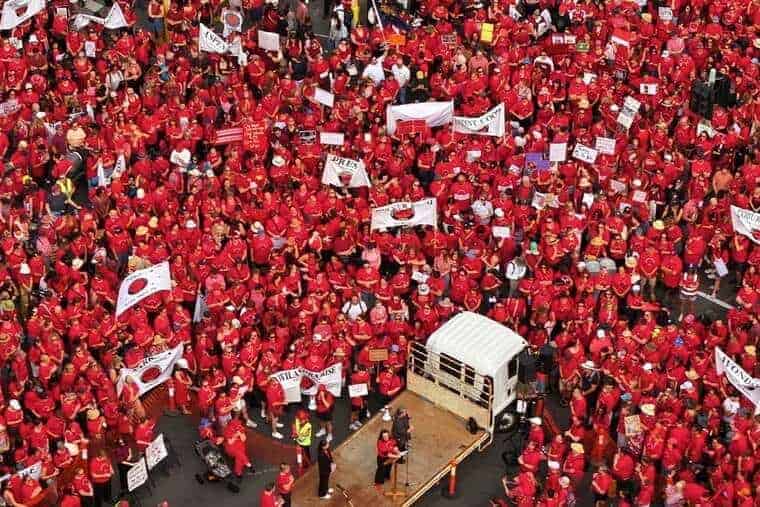
Local union branches mobilised for a 100,000-strong nationwide demonstration against Agenda 2010 in November 2003.
Anti-globalisation activists joined the mobilisation in Berlin.
The protest was followed by anti-tuition fee strikes and protests at universities, which in Berlin were directed against the local coalition government of the SPD and the PDS.
The unions mobilised 500,000 against the federal government’s neo-liberal policies on 3 April 2004.
This turned out to be the greatest union protest against social democracy in German history.
In autumn 2004 the so called Monday Demonstrations, named after the East German protests that toppled the Stalinist regime, erupted spontaneously against the introduction of the Hartz IV reforms of unemployment benefits due for 1 January 2005.
Although the various movements could only gain minor concessions, they had a lasting political effect by alienating many millions from the SPD and opening the horizon for an organised political alternative.


Fascist Tommy Robinson didn’t receive the same treatment
Russia has threatened revenge after British-made drones targeted its oil refineries and transport networks
Progressive candidate has won primary in Republican dominated state
Rank-and-file rebellion secures pay rise