Striking at Newport Passport Office over a terrible pay offer Picture: PCS union on Twitter
Civil service workers’ unions all rejected a terrible pay offer from the government on Friday of last week.
Workers in the largest of them—the PCS—are set to strike nationally on Friday of next week. Others in the Prospect union—representing largely government scientists—plan strikes on 10 May and 7 June. And even the senior civil servants’ union the FDA says it could ballot its members for action.
Bosses in the government Cabinet Office last week offered union leaders a pay increase of between 4.5 and 5 percent for this financial year. And they didn’t offer any change to the 2 percent increase they forced an all workers last year.
That’s a massive real-terms pay cut in both years, and follows years of similar below‑inflation rises and pay freezes.
After rejecting the offer, PCS general secretary Mark Serwotka said, “The government has once again insulted our members in a way no other workers have been subjected to. This is an outrage, and to single us out for worst treatment than any other union is completely unacceptable.”
The offer shows that it will take much harder‑hitting action to break the government.
Sections of workers in the PCS have been taking part in “targeted action”—strikes by different groups of workers at any one time—since December last year.
Recent action includes strikes by workers at the British Library, British Museum and Ofgem—with large turnouts on picket lines. And workers in the Passport Office are striking continuously until 5 May.
PCS union leaders say this strategy is designed to cause maximum disruption to the government, with minimal loss of pay to members. They say backlogs are “starting to build” in the Passport Office and has caused disruption and delays in other government departments.
But—as last week’s pay offer shows—the targeted action hasn’t been enough to force the government to budge. Strikes that hit every department at once could be much more powerful.
PCS workers have already struck together on 1 February and 15 March. They were two of the most successful days of strikes in years in the civil service—and show the potential for the next one on 28 April, more of those, and longer.
Nick Clark
Workers at the Environment Agency have ramped up their fight for decent pay with a three-day strike from Friday of last week.
The Unison union members at the government department walked out over an insulting 2 percent pay offer.
They are arguing that they have suffered a 20 percent real terms pay cut since 2010—and don’t want even more cuts now.
Workers have engaged in a long-running ban on weekend working, which means they’re not responding to emergency callouts to flood defences, river pollution and fires.
Environment Agency worker Tom said, “The low pay means there are real problems recruiting staff.
“That means we’re expected to cover vacant posts and do more for less money. Staff need a pay rise that properly values the important work we do keeping communities safe.”
Yet despite their safety‑critical role, bosses rely on workers to volunteer to work emergency rotas as well as their normal day jobs. Workers are right to escalate their fight for decent pay.
Sarah Bates
Care workers in Brighton & Hove are claiming victory after receiving an improved offer in a long-running pay dispute. Around 800 city council workers, many of them women care workers, have been battling since 2013 to receive the same bank holiday payments as bin workers.
Now Unison union members stand to receive a settlement of up to £2,000 each, and a promise they will receive a bank holiday payment
The council has now offered workers 70 percent of the difference between the current bank holiday pay and the new, improved rate.
But it’s a fraction of what workers actually deserve. It’s a disgrace it’s taken a decade for the council and union to cook up an agreement It is possible to win more in such pay disputes, but it requires a serious fight, as strikes in Glasgow and Birmingham showed.
Sarah Bates
Workers in the Post Office have voted to accept a rotten three-year pay deal after CWU union leaders recommended it to them.
A 9 percent pay increase will be paid this year. But it covers three financial years—2021-22, 22-23 and 23-4. That’s a 3 percent increase each year—a real‑terms pay cut for this year and last. It is worse than the 5 percent offer for last year that workers struck against.
It also includes one‑off lump sum payments of varying amounts for workers on different rates. These won’t be included in workers’ pay packets in following years.
CWU members voted by 94 percent to accept the deal. But by that point, it had been months since their union leaders had called action. And CWU publicity glossed over the details, selling it as a 9 percent increase.
Workers at Saica Paper UK Ltd in Manchester are set to strike in a dispute over pay.
The 40 Unite union members work at the Manchester Road factory. The company produces 100 percent recycled paper for corrugated cardboard.
The workers recorded a 97 percent vote in favour of strikes, having rejected a below-inflation pay offer. They were offered what was claimed to be a 9.5 percent pay increase which is a real terms pay cut.
New figures were due out this week, but the present inflation rate shows prices rising at 13.8 percent a year.
To make matters worse, workers on average only received 6.5 percent of the offer as a consolidated increase—permanent pay— with the rest being a one off lump sum payment.
A planned series of six 12 and 24-hour strikes cover Friday of this week, Tuesday and Saturday of next week, followed by 1, 5 and 8 May.


A staffing crisis in the NHS
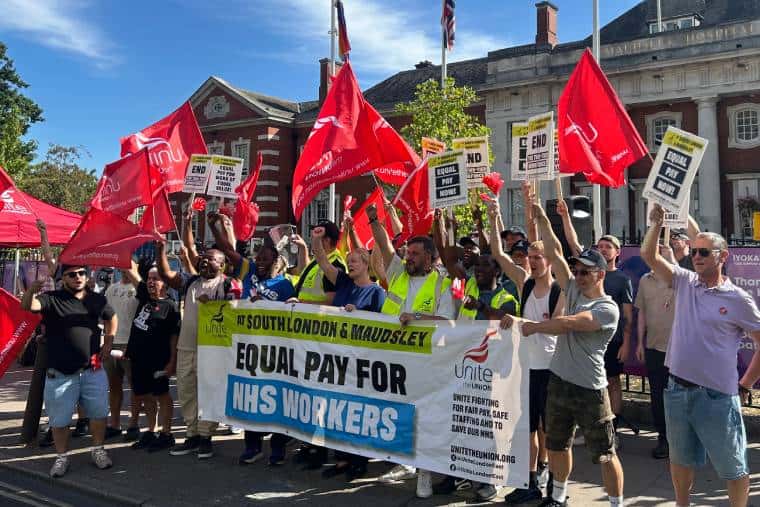
Health workers set to strike across four Manchester hospitals
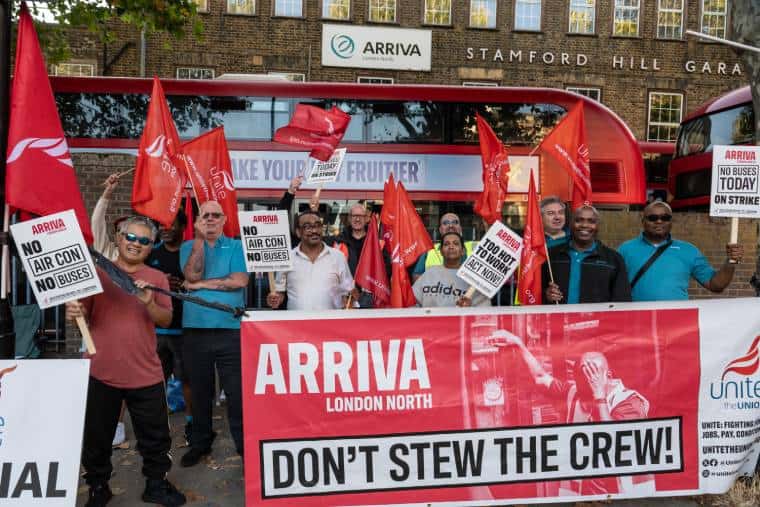
Bus workers rejected an offer and came back out