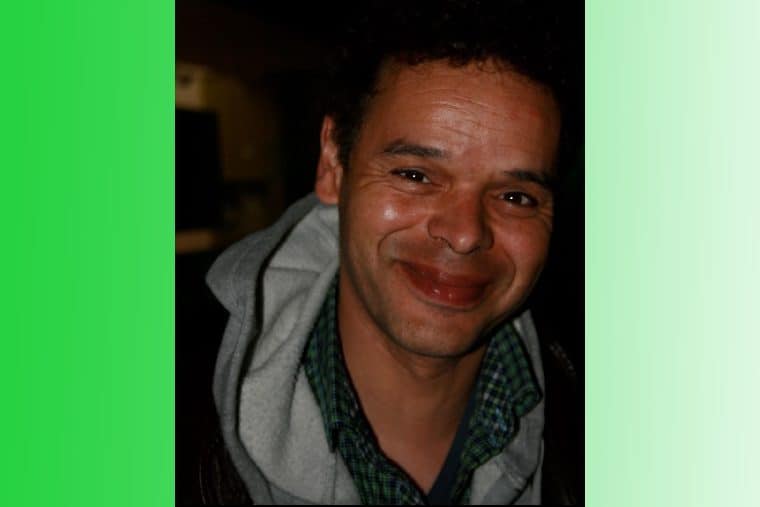
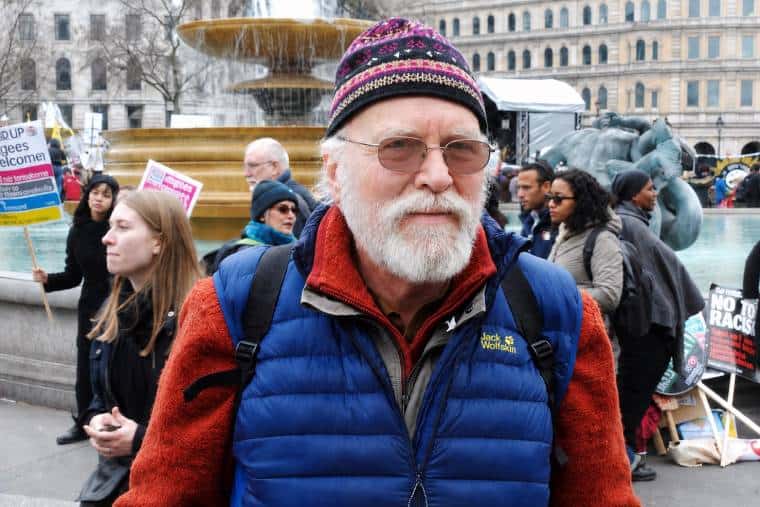
Bob Murdoch
Many will be saddened by the news of the loss of an inspiring socialist and working class fighter.
Bob Murdoch was a long-standing member of the Socialist Worker Party and its forerunner, the International Socialists.
Born in Scotland in 1940, Bob later recalled that his parents tried hard to stop their children from ending up “going down the pit”. Bob was probably the first in his pit
village in Fife to go university, where he studied engineering.
Bob moved to Newcastle via Bristol with his wife and four children. He went to work in the drawing office at Parsons engineering—which made turbine generators for
power stations—in 1971. He was soon involved in a series of long running disputes over wages and against redundancies.
He said, “By the end of the year, there were billboards up around Newcastle saying a thousand redundancies at Parsons. So this was, to say the least, quite a shock.”
Alongside his great comrade, union branch secretary Terry Rodgers, Bob was part of organising a successful and militant campaign to stop the redundancies. At one point workers in the drawing offices prevented drawings going to the shop floor to make things—effectively trying to stop any output at all.
When management started handing out redundancy letters, Bob and others went to the bosses’ offices to hand them back. He said, “I was sort of at the front, you know! Not a position I’d been particularly used to previously. But it was ok, I made a little speech telling him we rejected the redundancies, and that we’re bringing the letters back.”
Workers who had been sacked occupied the factory, holding talks on the subject of “Old Newcastle”, “The Welfare State”, and “Women’s Liberation”. Folk singer Alex Glasgow even came to Parsons and performed two concerts. The occupation forced management to halt the redundancies.
The union branch also challenged the Tory government’s Industrial Relations Act, which prevented unions from requiring employees to be members. Even though the union branch was not formerly allowed to operate as a closed shop, Bob said that it still recruited everyone who joined the company.
He found the political analysis offered by Socialist Worker invaluable in explaining current events, such as General Pinochet’s coup in Chile in 1973.
As part of a dispute at Parsons in 1977 Bob helped to shut down the plant to co-incide with the visit to Newcastle by US President, Jimmy Carter. In 1982 Bob also helped to organise a solidarity walkout in support of the NHS workers’ pay claim.
Over many years Bob played an important role in a wide range of campaigns: from Chile Solidarity to support for the miners during the Great Strike; to the campaign
against Thatcher’s Poll Tax throughout 1990 and the campaign against pit closures 1992.
Bob could be relied upon to support and help to build a wide range of protests. He was present on nearly every anti racist mobilisation and spoke at the 2019 climate
protest in Newcastle alongside an eleven year-old school student.
After retiring Bob continued to be Branch Secretary of the Tyneside Engineering Branch of Unite and was active in Newcastle Trades Union Council. He also continued to play a crucial role in the local branch of the Socialist Workers Party, inspiring young and old alike.
He was a stalwart of the party’s campaigning stalls, showing up on Northumberland Street pretty much every Saturday.
Bob’s socialist politics developed in tandem with his experience as a workplace organiser at Parsons. He said in an interview for the North East Labour History Society: “It was tremendous… The people I worked with in the Union, the things we did, the good times. The bad times. It was so brilliant. Very fundamentally part of my life”.
Bob leaves a legacy of a “quiet revolutionary”, but one who knew when not to be when it mattered.
We wish to send our condolences to this family and friends.