Abram Games was an outstanding graphic designer whose mission was to provoke everyone—even his clients.
He was born in poverty in the Jewish East End of London. As a teenager, he displayed a brilliant ability to boil down complex ideas into simple images and slogans.
But art school found no way to harness his talents, while advertising agencies complained he was too hard to handle.
As the threat of fascism loomed, Games scaled a London building to tear down a swastika flag he saw. He designed posters demanding aid for Republican Spain.
And it was at this time that his graphics started to win awards.
During the Second World War, Games wanted to focus on what kind of Britain would emerge.
In his 1942 poster, Your Britain, he depicted a modern health centre in the stark modernist style that would come to dominate architecture in the 1950s.
But behind the gleaming white centre lies a past dominated by poverty and despair.
A child with rickets stands in a derelict bombsite painted with the word “disease”. Below them both is the slogan “Fight for it now”.
Churchill was furious, saying it was, “a dreadful libel on conditions prevailing in Great Britain before the war”.
One of his aides ripped it out of an exhibition and ordered its print run pulped.
Games was one of the first to see photographs of the Nazi concentration camps after they were liberated. The images stayed with him for the rest of his life.
He designed regularly for the Israeli state in its early years. But according to his daughter Naomi, he “wouldn’t approve” of its current actions.
By the 1950s, Games seemed to have been absorbed by the establishment, designing logos for the Festival of Britain and the BBC.
But, as his later work for the United Nations shows, the poverty of his youth marked him—and he always wanted to put his pen in the service of those who still suffered.


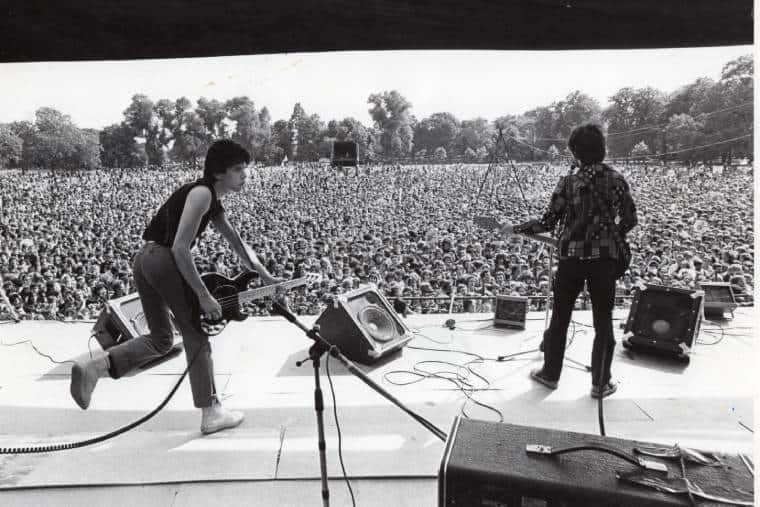
Interviews with RAR organisers 50 years on
Hadestown is a damning condemnation of capitalism
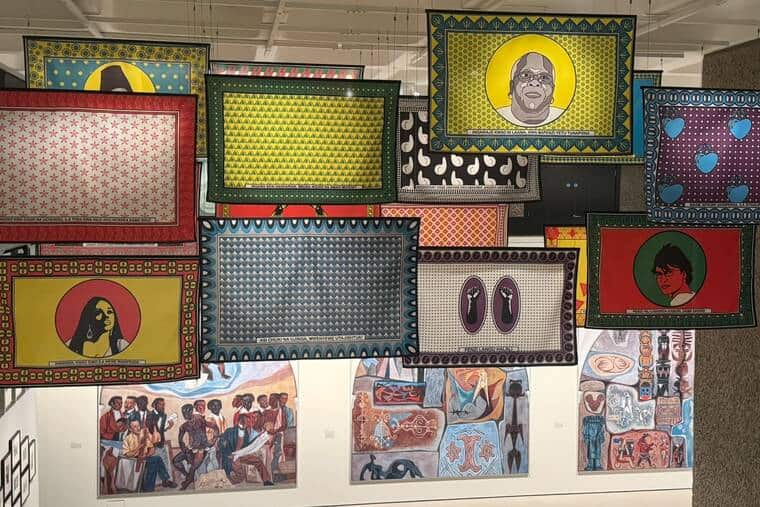
Exhibition seems to revel in making histories and events obscure
Artist Mike warns, 'This is what you’ll lose'