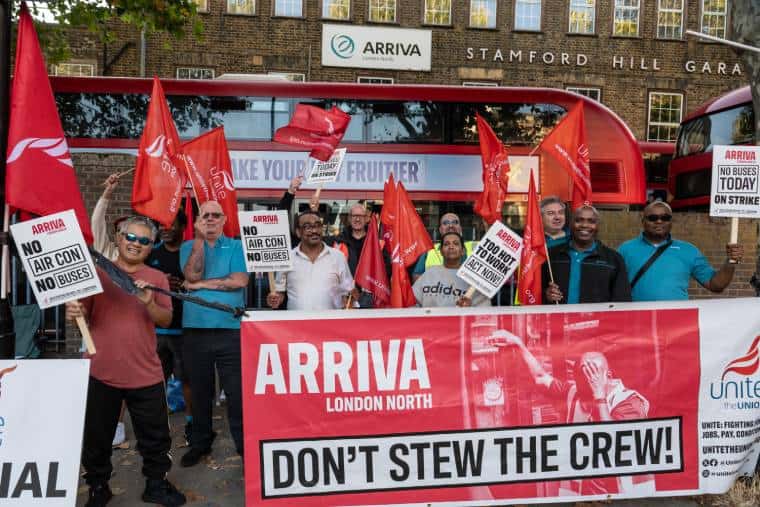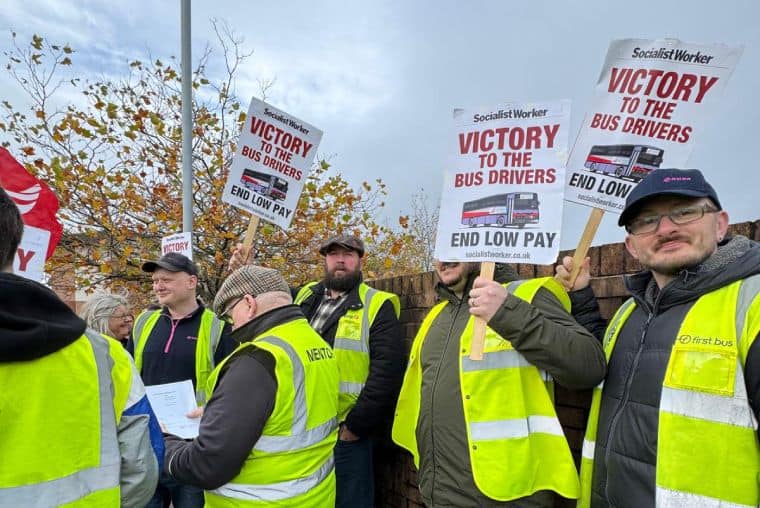
Bus workers are ramping up strikes
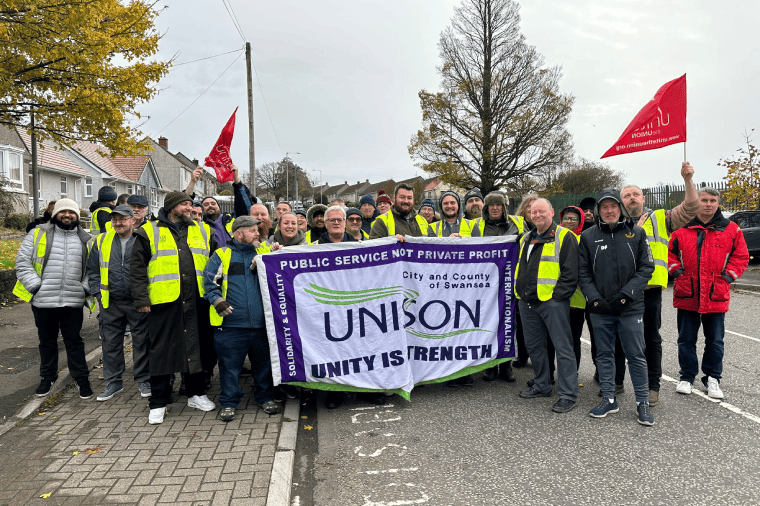
The fight for pay at First Bus in South Wales was set for a huge upturn as Socialist Worker went to press.
Over the past few weeks, hundreds of Unite union members have walked out in two four-day rounds of action. Now workers are planning a continuous strike from Thursday until 21 January.
“Most of the drivers have had enough and want to be paid fairly,” one striker told Socialist Worker.
“Most of them understand that paying us a better rate will benefit the local economy too, but the main thing is just to be able to cover the bills.”
Drivers at First Cymru are paid £13.40 an hour, but Stagecoach in South Wales currently pays workers £14.44 per hour.
While workers announced the strike last week, there were last minute talks between First Bus and Unite at the Acas conciliation service on Tuesday.
“Unite is saying the minimum offer must be £14.30 per hour and full back pay,” the striker explained. “There’s no sign yet as to whether the offer will be enough to convince members.”
Unite members will meet after to vote on whether to accept the offer. The last pay deal, offered before the previous round of strikes, was rejected by 73 percent of members.
“Many members are worried about managing over Christmas, but we are now receiving strike pay from Unite and they have a hardship fund to help too,” they said.
“The Welsh economy is depressed compared to England. Large corporations take advantage and underpay workers because they think they can get away with it.
“I think it is right to strike. Welsh workers, especially outside Cardiff, are treated as second class.”
Donate to the strike fund
Unite First Cymru Swansea Branch B2061
Sort Code: 60-83-01
Account No: 20289681
Ref: “Bus Strike Donation”
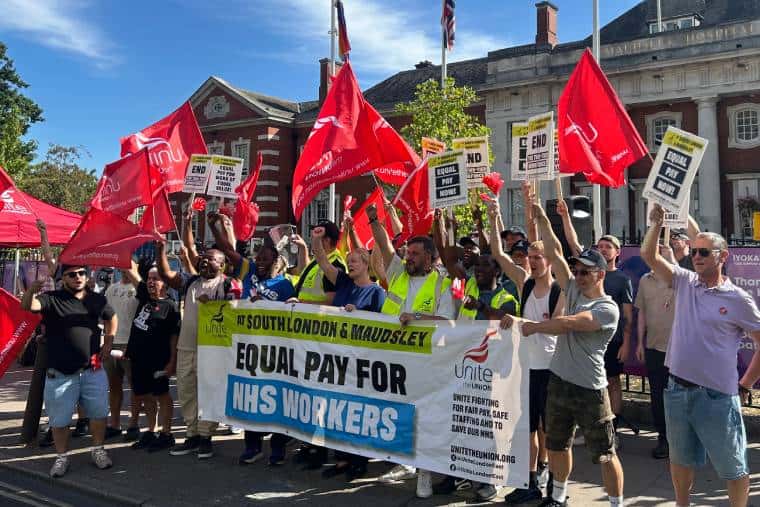
Low-paid health workers in south London have won a major victory over contracts that treated them like second class citizens.
Over 500 UVW union members at Epsom and St Helier University Hospitals NHS Trust in south London have won full NHS terms and conditions. The union says the deal is worth nearly £10 million.
The workers, who do essential roles as cleaners, caterers and porters at the Trust’s hospitals, are overwhelmingly black or migrant backgrounds.
They were brought in-house four years ago, but were denied NHS Agenda For Change contracts, which is the main contract for NHS workers.
They got organised with UVW earlier this year after many had previously been part of GMB and Unison. And they built a strong campaign that engaged hundreds of people and resulted in a 98 percent vote for strikes.
On 6 November the hospital board voted to implement full Agenda For Change contracts for the workers.
They will now receive full NHS pay, pensions, sick pay and annual leave from day one of their employment.
Min Chale, who has worked as a cleaner at St Helier Hospital for nine years said, “We won this by joining UVW and fighting all together. “We had been asking and waiting for years and nothing was changing.
“But UVW worked hard with us, spoke to us every day, supported us and encouraged us to keep our spirits high.
“We kept spreading the word and talking to each other and one by one we became hundreds. We got united and that gave us power to get a deal.”
They are still fighting for back pay, and workers have said they will strike again if bosses renege on the deal. But the success of the campaign so far shows the power of workers to hit back at poverty pay by organising and threatening to take action.
RMT union members employed by private company Carlisle Support Services at Northern Trains struck last Friday after their employer shut down negotiations.
They are in a dispute over pay and say there is a culture of bullying and harassment by management.
The private company blames “financial pressures” for poverty pay.
The RMT has called a day of action as part of a wider national campaign to end outsourcing railway.
The RMT union will demonstrate outside City Hall in London on Thursday.
They are calling on mayor Sadiq Khan and Transport for London (TfL) to halt the re-tendering of the Tube cleaning contract and bring the workforce back in-house.
Hundreds of cleaners working across TfL are outsourced and are denied the same contracts as their fellow TfL workers.
A recent survey by the RMT showed that 80 percent of rail cleaners are struggling to make ends meet.
Workers at the Newham Centre for Mental Health began six weeks of strike on Monday.
After already striking for 26 days the facilities workers, employed by Grosvenor Facilities Management (GFM), won’t stop putting the pressure on.
The Unite union members are furious as GFM refuses to pay up.
Despite working in an NHS facility, the workers are employed privately by GFM.
That means they are not on NHS contracts and are paid less, with less benefits.
Workers want this addressed—but GFM refuses to listen. The workers are demanding they are paid the same as their NHS equivalent, that a proper sick pay policy is introduced and the company recognises Unite for collective bargaining.
The Gloucestershire phlebotomists’ strike is the longest strike in NHS history.
The workers who take blood samples for patients have been out on strike for more than 236 days.
The Unison union members are demanding to be paid fairly for the work they do.
Phlebotomists are classed as band 2 on the NHS pay scale, but they regularly take on work that goes beyond the description of band 2 roles.
This dispute is of national significance for all workers, but most importantly those in the health service.
Trade unionists joined with strikers on Monday in a solidarity rally, marching through Gloucester in a show on strength amid the long-running strike.
As the “mega pickets” on the Birmingham bin strike showed, workers joining together boosts collective strength. It can reinvigorate a strike and put the pressure on to win.
With ongoing fights around contracts, Unison should look to bring workers out on strike together. That’s how this strike can win.
Birmingham council is set for more trouble.
Hundreds of bin workers have been on all out strike since March. The Labour-run council did everything it could to break the strike, using the courts and a huge scab operation.
But agency workers who were breaking the strike have voted to join it. The Job&Talent agency workers have faced harassment and bullying at work, with unsustainable workloads and blacklisting threats.
As more and more refused to cross the Unite union picket lines, they voted to strike from 1 December. It would be a huge thorn in the council’s scab operation. Workers uniting is crucial for the strike to win.


A staffing crisis in the NHS
Health workers set to strike across four Manchester hospitals
Bus workers rejected an offer and came back out