What’s labelled ‘regeneration’ often displaces working class life (Photo: WikipediaCommons)
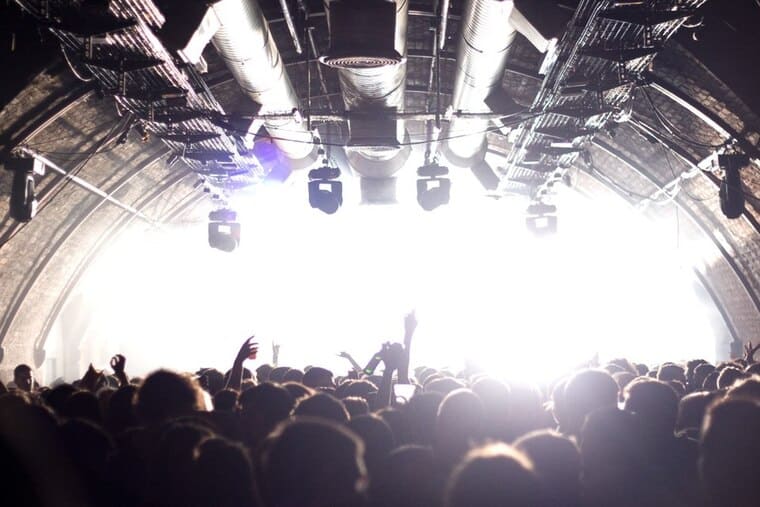
A grassroots campaign in Glasgow is fighting to defend The Arches, one of the city’s best cultural spaces.
Developers want to convert the space—which is a bar, theatre, live music venue and nightclub—into yet another corporate leisure complex and a bowling alley.
The venue, now called Platform, is the centre of a fast growing public backlash at greedy regeneration schemes and the loss of vital cultural spaces.
The threat to The Arches is not a dispute over a single building. It reflects how capitalism reshapes the urban landscape by eliminating areas which don’t fit its model of a sanitised city.
After artists and venue spoke out, people came together to launch the Arches Not Bowling campaign.
Organisers say the public response has been “overwhelmingly supportive” and it “continues to grow every day.”
Before its closure in 2015, the Arches represented a rare pocket of working class cultural autonomy.
“It was never just a venue. The Arches was a full creative ecosystem that shaped careers and supported homegrown Scottish talent,” says the campaign.
The re-opening of the Arches as Platform in 2022 was a chance to restore that tradition.
The venue quickly drew internationally recognised artists and local musicians.
Campaigners right say this demonstrates the capacity of a mixed-use cultural space to serve the public, while resisting the developers’ profit-driven agenda.
The campaign’s broad support shows that many people recognise the underlying dynamic.
“There is a shared understanding of what this space meant to Glasgow and the wider music and arts community,” say campaigners.
The anxiety at the possible loss of The Arches fits with a long-running pattern in Glasgow’s redevelopment strategy.
Council planning decisions have repeatedly favoured developers, while eroding independent culture.
What is marketed as regeneration is often a form of enclosure. Working class life is displaced to free up space for higher value commercial activity.
Campaigners argue that cultural spaces should remain under collective control.
“These spaces belong to the creative community, to the audiences who shaped them and to future generations who deserve access to culture, not just corporate entertainment,” they say.
Planning processes are moving quickly, so the campaign is urging Glasgow City Council and the government to treat cultural impact as central, not secondary.
If Glasgow wants to preserve its identity as a city shaped by working class creativity, it must defend spaces like The Arches from the logic of commercial redevelopment.
LUX, the fourth studio album by Rosalia, reflects the massive impact that women have played in musical expression throughout history.
She brings together traditional flamenco rhythms and heavy baselines with baroque and Catholic references.
These link the ecstasy and grief felt by female saints and mystics throughout history, with the experiences of a woman constantly exposed to an audience.
The album explores heartbreak, modern dating culture, sex and memory.
It does this through operatic songs that reflect Rosalia’s classical musical training, blending it with electronic effects and distortion.
It opens with Sexo, Violencia y Llantas which acts as a prologue for the rest of the album. She questions how one can both love the physical world and experience it fully while also living a divine and godly life.
Rosalia contrasts the carnal and material felt in daily life with divine peace, glimmering light, doves and saints.
The album is not only a musical exploration, but a linguistic one. There are 13 different languages on the album, some of which can only be heard in exclusive songs in the vinyl release.
For example, the song Focu ‘ranni has lyrics in Sicilian, a language that has historically been under attack.
In Porcelana, the chorus is in Latin, employing a language associated with religious texts. It does this to present an existential conflict that reinforces the premise of the album—“I am nothing, I am the light of the world.”
In this song, the subject is in crisis, seeking experiences that bring intense feelings of pleasure or pain, but that inevitably leave her numb.
In La Yugular, Rosalia sings in Arabic referencing Rabia Al Adawiyya, a female poet celebrated in Sufi Islam.
LUX pushes the boundaries of what pop music can sound like. It shows that the legacy of music does not have to be contained to stuffy auditoriums and overpriced concerts.
It is a celebration of female musicians and renounces the use of AI tools in its production.
Overall, it is a must hear that combines catchy baselines and choruses with an intense emotional listening experience.
Eva Colwell


Interviews with RAR organisers 50 years on
Hadestown is a damning condemnation of capitalism
Exhibition seems to revel in making histories and events obscure
Artist Mike warns, 'This is what you’ll lose'